SGB Custom Painting Blog
Painting Stained Wood Trim White: What to Know Before You Start
Frank White • November 9, 2026 | Chico, CA | USA
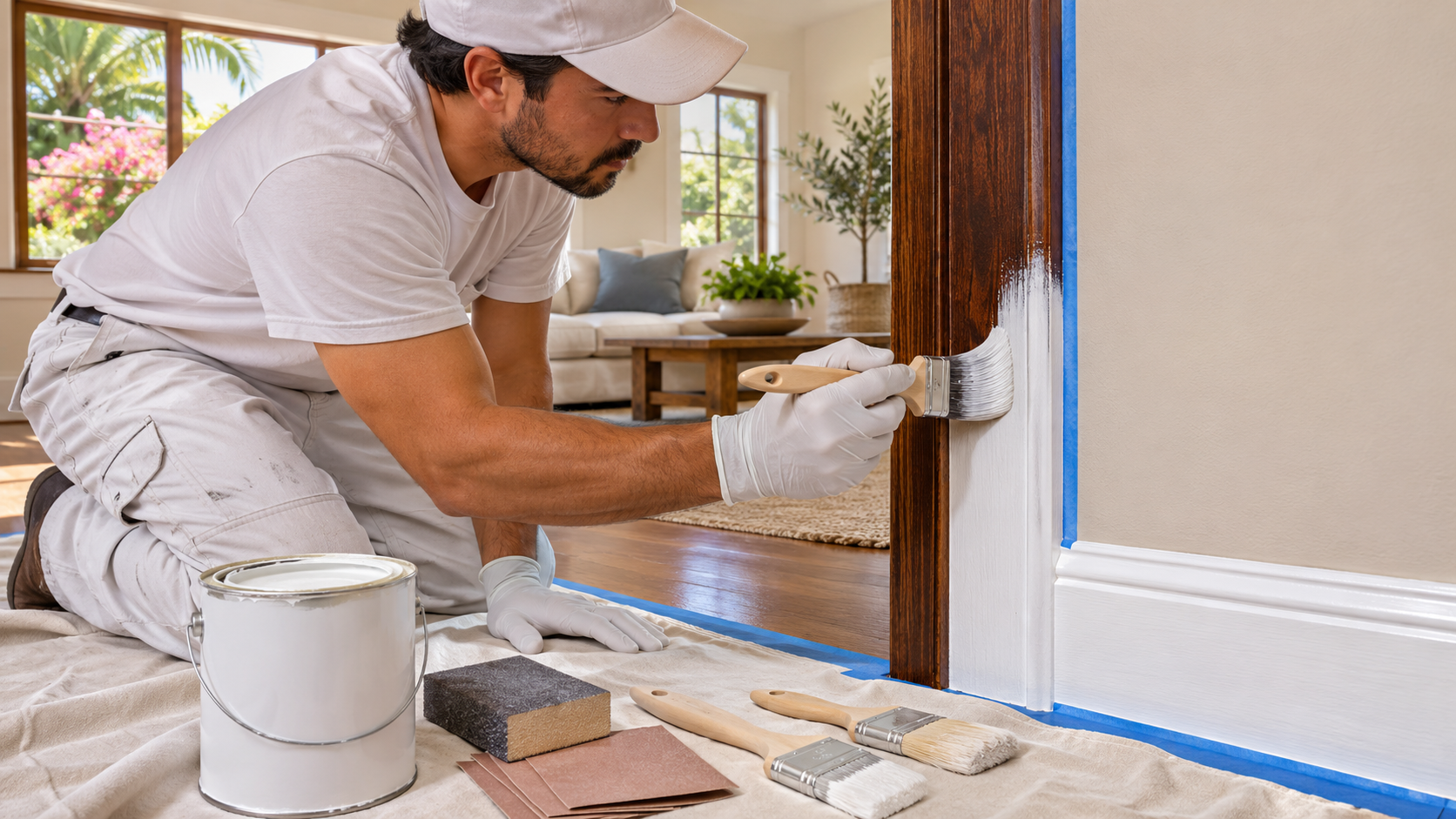
Dark stained trim can make an otherwise updated room feel heavy. Painting it white or another color can brighten the space and tie older woodwork in with newer walls, doors, and floors. But it takes a lot more prep than painting a wall. Before you paint stained trim, you need to decide whether covering the wood is right for your home, and plan for cleaning, dulling the old finish, stopping stains from bleeding through, and dealing with the wood grain. Those details are a big part of every interior painting job we do in Chico that involves stained woodwork.
Quick Answer: Can You Paint Stained Wood Trim White?
Yes, as long as the wood and its existing finish are in good shape. The trim has to be cleaned, lightly sanded or deglossed, repaired, and primed with a stain-blocking primer before the finish coats go on, or yellow and brown stains can show through the white.
Should You Paint Stained Trim at All?
Painting stained trim makes rooms look lighter, cleaner, and more connected. It works especially well when other rooms already have painted trim, or when the walls, floors, and furniture have been updated but the original dark trim is still there.
There are also good reasons to keep the stain. Quality hardwood, carefully matched grain, and original millwork add character that’s hard to replace, and in a historic or character home, the natural wood may be part of what makes the house special. Some buyers value original woodwork, though no choice suits every buyer.
Keep in mind that painting is close to permanent. Paint can be stripped later, but getting it out of detailed molding without damaging the wood is slow, messy, and expensive. If you’re unsure, I’d suggest starting with one room, or holding painted samples next to the trim, before committing to the whole house.
Why Does Stained Trim Need Extra Prep?
Most stained baseboards, doors, and casings are sealed with varnish or polyurethane. Those finishes are made to resist moisture, dirt, and wear, which is exactly why new paint has trouble sticking to them.
We always start with cleaning. Baseboards collect dust and floor-cleaner residue, and doors and casings pick up fingerprints, hand oils, and household cleaners. Paint over that film, and it can peel, even if the trim looks clean from a few feet away.
Next, the glossy finish needs to be dulled with light sanding or a deglosser. The goal isn’t to strip the trim back to bare wood. It’s to get a clean, dull, stable surface the primer can grip, the same principle behind good paint prep on any surface.
Why Do Yellow or Brown Stains Show Through White Paint?
Many woods contain natural compounds called tannins. When the wood isn’t sealed with the right primer, those tannins can move up through the paint and leave yellow or brown marks, a problem known as tannin bleed. Dunn-Edwards’ paint problem guide explains that it usually comes from inadequate priming, using a primer that doesn’t resist tannins or moisture, and recommends a primer made to block it.
Oak is one of the woods where we see this most, and it shows up fast under white. A regular wall primer may cover the color but still let the stains through. If marks appear after the first coat of primer, more white paint won’t fix them. The stains have to be sealed with a stain-blocking primer before the finish coats go on.
Will Oak Grain Show Through the Paint?
Usually, yes. Paint changes the color of oak, but its open grain still shows unless the pores are filled before priming.
Some homeowners like that subtle texture because it shows the trim is real wood. Others expect a perfectly smooth finish and are surprised when the grain pattern is still visible under white paint. We like to settle this before we start.
A smooth look means extra filling, sanding, and checking before primer, and deep grain may need more than one round. Detailed profiles slow the work down, and even with careful filling, some texture can remain. If you’re happy with visible grain, the job takes less prep and still looks clean and consistent.
What Repairs Should Happen Before Painting?
Fill nail holes, dents, loose joints, and damaged edges before priming. White paint makes shadows and defects stand out, especially when light hits the trim from the side.
Small holes and dings get filled with a wood filler and sanded smooth. Gaps where the trim meets the wall can usually be caulked for a clean line, and open joints between pieces of molding may need attention too.
Caulk shouldn’t be used to hide bigger problems. Loose trim needs to be refastened, moisture problems need fixing, and soft, swollen, or rotted wood needs repair or replacement. Paint makes trim look better, but it can’t fix damaged wood.
Should Baseboards, Doors, and Window Trim Be Painted Together?
In most homes, painting all the related woodwork together gives the best result. Bright white baseboards next to dark stained doors and window casings can look unfinished, unless the contrast is clearly a design choice.
Before we start, we’ll agree on exactly what’s included: baseboards, door casings, window trim, interior doors, crown molding, and built-ins. You don’t have to paint every piece of wood in the house, but the stopping points should make sense when you look from one room into the next.
Doors deserve extra thought. They get handled every day, and any difference in color or sheen between a door and its casing is easy to spot. Painting each door and its trim as a set keeps the room looking intentional.
How Do You Choose the Trim Color?
Pick the trim color by looking at it next to your walls, floors, cabinets, and any trim that’s already painted. Warm whites tend to suit cream, beige, warm greige, and wood floors. Cooler whites suit gray, blue, and cooler neutrals.
If other rooms already have painted trim, matching that white usually looks better than introducing a second one. Small differences between whites become very noticeable where two rooms meet. Test samples in daylight and under your lamps before you decide.
For the finish, trim needs a durable, washable paint that stands up to scuffs from shoes, vacuums, and hands. The product and the prep matter more than the sheen alone.
How Long Does It Take?
Longer than most people expect, because most of the work happens before any white paint goes on. A single room might take a few working days. Trim, windows, and doors through a whole house can take a week or more, depending on how much woodwork there is, the repairs, grain filling, primer, and drying conditions.
Dry is not the same as cured. Trim can feel dry while the paint is still soft enough to pick up fingerprints, stick, or dent. We’ll tell you when it’s safe to reinstall hardware, close doors tightly, and clean the trim. Until then, be careful with furniture and vacuums near the baseboards.
What About Homes Built Before 1978?
If your home was built before 1978, the trim should be checked before anyone sands it. Even when you can only see stain and varnish, there may be older painted layers underneath or on nearby surfaces that contain lead, so lead-safe work practices may be needed to keep dust under control.
Frequently Asked Questions
Do you have to sand stained trim before painting?
Yes, in most cases. Light sanding or a deglosser removes the shine so the primer can grip, but it doesn’t mean stripping to bare wood. Clean the trim first, because sanding dirty trim just spreads the grime around.
Why is my white paint turning yellow on oak trim?
That’s tannin bleed. Natural tannins in the oak are coming through the paint because the wood wasn’t sealed with a stain-blocking primer, and another coat of white won’t stop it. The trim needs a stain-blocking primer over the marks before more paint goes on.
Should trim and doors be the same color?
They don’t have to be, but matching them usually looks more unified. Stained doors with white trim can work well too, as long as you use that look throughout the house. Keep the sheen the same if the colors match, or the two can look slightly off.
Can you paint trim without removing it?
Yes. We paint most baseboards and casings in place, which avoids damaging the trim, the walls, or the floors. Doors are often easier to take down and paint flat, and any trim that’s loose or damaged may need to come off for repair.
Ready to Brighten Your Trim?
Painting stained trim can make a big difference to how a home feels, but the result only lasts if the cleaning, prep, repairs, stain-blocking, and curing are done right. Before you choose white, think about the quality of the wood, the character of your home, and whether you want the grain to show.
You can read what Chico homeowners say about working with us on our Google Business Profile. To see the rest of what we do, start at our home page. If you’d like us to look at your trim and doors, get in touch, and we’ll come out, check the woodwork, and help you plan a finish that suits the rest of your home.
About SGB Custom Painting
SGB Custom Painting is a trusted Chico Painting Contractor known for clean prep, clear communication, and color that holds. For more than twenty five years, our local team has delivered interior, exterior, and cabinet projects for homes and businesses with careful protection, proper priming, and tidy jobsites. We follow EPA lead safe practices on older properties, keep schedules dependable, and give every project the respectful touch the North Valley deserves.

Love Your Space Again, Starting Today!
Locally Owned & Operated • EPA Lead Safe Certified • CSLB Licensed
Call 530-924-4109 or complete the form and expect a friendly call to confirm scope, discuss color options if needed, and deliver a no surprise estimate you can approve with confidence.
Contact Us
Refresh Your Home With Professional Painting
If you are thinking about repainting your interior, freshening up exterior siding, updating tired kitchen cabinets, or giving your business a cleaner look, our team is here to help you plan it right and paint it to last. Reach out to SGB Custom Painting to talk through your project, get honest expert guidance, and take the next step toward a home or workspace you will be proud of every day.
Follow Us
Elevate Your Space with SGB Custom Painting