SGB Custom Painting Blog
Painting Bathroom Vanities: What's Different From Kitchen Cabinets?
Frank White • October 1, 2026 | Chico, CA | USA
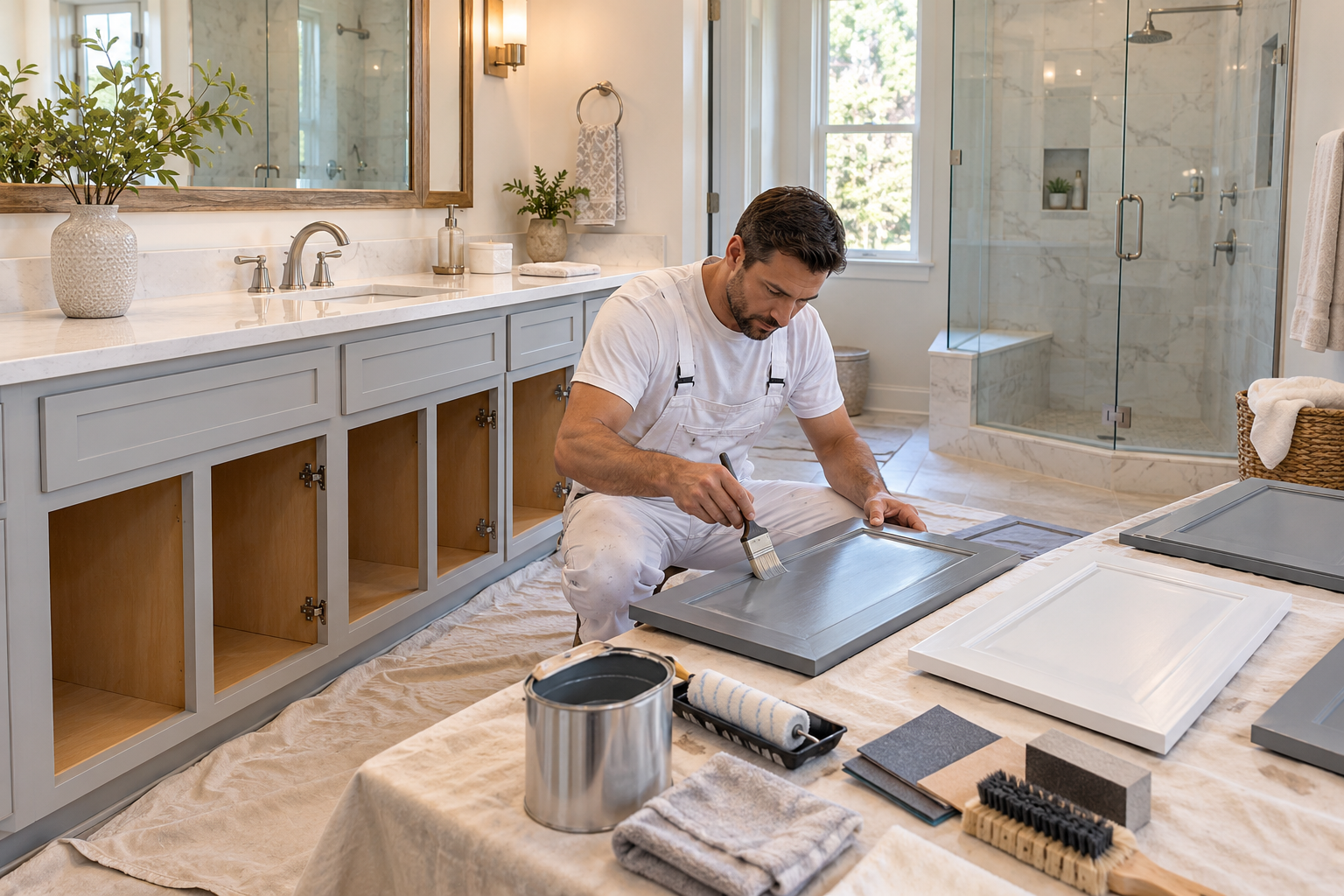
A dated bathroom vanity can make the entire room feel older, even when the countertop, mirror, and fixtures are still functional. Painting may offer a practical update, but a bathroom vanity does not face exactly the same conditions as kitchen cabinetry. Bathrooms regularly expose painted surfaces to shower steam, humidity, sink splashes, cosmetics, and cleaning products. If you are considering painting a bathroom vanity, understanding those differences will help you decide whether the cabinet is suitable for refinishing and what the project needs to produce a dependable finish.
Quick Answer: How Is Painting a Bathroom Vanity Different?
Painting a bathroom vanity requires greater attention to moisture damage, ventilation, exposed edges, and curing conditions than painting many kitchen cabinets. The vanity must be structurally sound, fully dry, and prepared with products compatible with its material and existing finish. Shower steam and sink splashes also need to be controlled while the new coating dries and cures. We paint bathroom vanities too, but we do not treat them like smaller kitchen cabinets. Our approach to cabinet painting in Chico starts with evaluating the cabinet and the bathroom environment.
Why Is a Bathroom Harder on Painted Cabinets?
Bathrooms expose paint to concentrated moisture in a relatively small space. Every hot shower adds water vapor to the air, while splashes around the sink can reach doors, drawer fronts, and cabinet edges. If the room lacks effective ventilation, that moisture can remain on surfaces or enter vulnerable seams. A vanity also comes into contact with materials that kitchen cabinets may not encounter as often. Toothpaste, liquid soap, cosmetics, hair products, skin-care products and bathroom cleaners can leave residue or affect an unsuitable finish. Water may collect around faucet bases, countertop seams and sink edges before running down the cabinet face. None of this means a bathroom vanity cannot be painted. It means the condition of the cabinet, preparation, coating compatibility and moisture control deserve careful attention. A finish that performs well in a dry bedroom may not be the right system for a vanity beside a frequently used shower.
How Does Ventilation Affect Vanity Painting?
Good ventilation helps control humidity during the project and after the bathroom returns to use. The exhaust fan should be operated during and after showers so moisture is removed instead of settling on the vanity and other painted surfaces. If the fan does not move air effectively, that problem is worth addressing before refinishing the cabinet. Humidity can slow drying and curing. It can also make it harder to predict when doors, drawers, and hardware are ready to be handled. The U.S. Environmental Protection Agency's moisture-control guidance explains why water movement and indoor moisture need to be controlled as part of maintaining a building.
Dry time, recoat time, handling time, and full cure are different stages. A coating may feel dry but remain soft beneath the surface. The bathroom may therefore have limited use for longer than expected, especially if showering would fill the room with steam before the finish is ready. During the project, plan to use another bathroom if possible. If that is not practical, ask which fixtures can remain accessible and when. Avoid showering, wiping the vanity, setting toiletries on it, or allowing water to splash onto the finish until the product instructions permit normal use.
Which Bathroom Vanity Materials Can Be Painted?
The vanity material plays a major role in whether painting is sensible. Two cabinets can look similar from the outside while requiring very different preparation.
Solid Wood
Solid wood commonly accepts paint well when it is dry, stable, and properly prepared. Existing clear finishes, grease, wax, and bathroom residue still need to be addressed. Wood grain may remain visible unless the project includes additional filling and surface preparation.
MDF
Medium-density fiberboard can provide a smooth painted finish when it remains in good condition. Its weakness is moisture exposure. Damaged MDF may swell, soften or lose its shape, particularly around sink cutouts, lower edges and plumbing openings. Paint will not restore swollen material to its original condition.
Particleboard
Particleboard is common in manufactured vanities and can sometimes be painted when its surface is intact. However, it is especially vulnerable to water damage. Check beneath the sink, around supply lines, and near the floor for expansion, crumbling, or soft spots. Severely swollen particleboard is usually a repair or replacement issue rather than a painting issue.
Laminate
Some laminate vanities can be painted after cleaning, controlled abrasion, and use of a compatible bonding primer. Because laminate is smooth and nonporous, adhesion should be tested before the whole vanity is coated. Sherwin-Williams recommends an adhesion-promoting primer for laminate or previously painted cabinetry in its professional cabinet-refinishing guidance.
Thermofoil
Thermofoil requires caution. It consists of a thin surface layer bonded to an underlying panel. If that layer is secure, a painter can evaluate whether a compatible system is possible. If the thermofoil is peeling, bubbling, or pulling away at the edges, painting over it will not repair the failed bond. Refacing or replacing the affected components may be more practical. For a closer discussion of coating systems, visit our guide to choosing paint for cabinets. Product selection should follow the vanity material, existing finish, and manufacturer’s instructions rather than a single universal recommendation.
What Water Damage Should You Check Before Painting?
A vanity should be inspected for water damage before preparation begins. Open the doors and examine the cabinet floor beneath the sink with good lighting. Look closely around plumbing penetrations, shutoff valves, drain connections, and the back wall.
Warning signs include:
- Swollen particleboard beneath the sink
- Soft, crumbling or distorted cabinet panels
- Peeling laminate or thermofoil
- Delaminating edges
- Dark staining or persistent musty odors
- Loose joints or a sagging cabinet floor
- Evidence of an active plumbing leak
A leak should be repaired before painting. The cabinet must also dry completely so moisture is not trapped beneath primer or paint. Cosmetic staining can sometimes be prepared and sealed, but structurally damaged material needs repair or replacement.
Paint cannot rebuild a weakened cabinet box. If the vanity floor is soft, the side panels are swollen, or the doors no longer align because the material has expanded, replacing the damaged components may provide better value than covering the problem.
What Preparation Is Specific to Bathroom Vanities?
Bathroom vanity preparation begins with removing toiletries and cleaning away residue that could interfere with adhesion. Soap, skin-care products, hairspray and cleaning solutions can leave films that are not always visible. Hardware, doors and drawers are then removed or protected according to the project plan. The painter also needs to protect nearby surfaces carefully. Faucets, sinks, countertops, mirrors, floors, plumbing and walls sit close together in a small work area. Masking and containment help keep sanding dust, primer and finish coatings away from those surfaces.
Edges around the sink and countertop deserve special attention because they frequently encounter water. Failed or cracked caulk should be evaluated and replaced with a compatible product where appropriate. The joint where the vanity meets the wall may also need caulking, but cabinet doors and drainage paths should never be sealed shut. The complete preparation sequence depends on the surface material and existing finish. Our guide to the professional cabinet refinishing process explains how cleaning, preparation, priming, and finish application work together.
How Should You Choose a Vanity Color?
Choose the vanity color in the bathroom itself because artificial light can change how a sample looks. Warm bulbs may make whites appear creamier, while cooler lighting can emphasize blue or gray undertones. Consider the countertop, floor, wall color, and metal finishes as one palette. A small bathroom does not have to use a white vanity, but a very dark color can carry more visual weight. Sheen and durability are related considerations, but they are not interchangeable, so the selected cabinet coating should guide the final choice.
Which Small Upgrades Work Well With a Painted Vanity?
New hardware can complete the update without changing the entire cabinet. Knobs, pulls, and hinges should fit the existing holes unless you plan to fill and redrill them. Reusing the same hole spacing generally keeps the project simpler.
Other useful updates can include a new faucet, fresh sink caulk, drawer organizers, updated lighting, or a replacement mirror. Plumbing and electrical changes should be handled by the appropriate qualified professional. These details are optional, but choosing them before painting helps avoid drilling, scraping, or handling the finish immediately after installation.
How Long Does Painting and Curing Take?
There is no universal timeline for painting a bathroom vanity. The schedule depends on the vanity’s size, material, condition, existing coating, repairs, primer, finish system, application method, ventilation, temperature, and humidity. Preparation and repairs may take longer than the visible painting. Each primer and finish coat must be applied within the product’s stated conditions and allowed the required time before recoating. Doors and drawers should not be reinstalled merely because the surface feels dry.
After reassembly, the coating may continue curing for days or weeks, depending on the product. During this period, use the vanity gently. Keep standing water off the surface, avoid harsh cleaners, do not place heavy toiletries against newly painted areas, and use the exhaust fan to manage shower humidity. Before work begins, ask for a realistic schedule covering preparation, application, reinstallation, and return to normal use. Our team confirms project logistics in the written scope because every vanity and bathroom is different.
When Should You Paint or Replace a Bathroom Vanity?
Paint the vanity when its structure is sound, the layout works, and the surface material can accept a compatible coating. Painting makes particular sense when you like the doors, drawers, and storage but want a different color or cleaner finish. Replacement deserves consideration when the cabinet is swollen, soft, delaminated, or structurally unstable. It may also be the better choice if the vanity is the wrong size, offers poor storage, interferes with bathroom circulation, or requires repairs that approach the scope of installing a new unit.
Refacing sits between those options by retaining the cabinet box while changing visible components. For a bathroom vanity, the decision should still be based on the condition of the specific unit, including the box, doors, drawer fronts, edges, and areas around the plumbing.
Frequently Asked Questions
Can you paint a laminate bathroom vanity?
Yes, some laminate bathroom vanities can be painted when the laminate is firmly attached, clean, and free from significant water damage. The smooth surface usually needs controlled abrasion and a bonding primer that is compatible with both the laminate and finish coating. An adhesion test can help show whether the proposed system will bond before the entire vanity is completed. Paint should not be used to hide lifting laminate, swollen panels or deteriorated edges. Those conditions indicate that the underlying material or adhesive has failed. The painter should inspect the vanity around the sink, plumbing and lower edges before deciding whether refinishing is a practical option.
Can I use the bathroom while the vanity is being painted?
You may be able to use part of the bathroom during some stages, but the sink, vanity and shower may need to remain unavailable for portions of the project. Doors, drawers, hardware and toiletries must be removed, while nearby fixtures and surfaces need protection. Showering can raise humidity and interfere with drying or curing, so you may be asked to avoid it until the selected coating has reached the appropriate stage. The exact restrictions depend on the room, ventilation, and coating system. If this is your only bathroom, discuss access before work begins so the project can be planned around essential use without exposing the finish to moisture too soon.
How long does a painted bathroom vanity last?
A painted bathroom vanity can remain attractive for years, but no responsible painter can guarantee one lifespan for every project. Performance depends on the cabinet material, previous finish, preparation, primer and coating compatibility, application, curing conditions, ventilation, and everyday care. Water left around the sink, repeated steam, harsh cleaners, and leaking plumbing can shorten the life of the finish. Gentle cleaning, prompt drying of splashes, and regular use of the exhaust fan can help protect it. Normal wear may still appear around handles and frequently touched edges. Damage caused by swollen panels or failed thermofoil cannot be prevented by adding more paint.
Does the vanity color need to match the bathroom walls?
No, the vanity does not need to match the bathroom walls. It can coordinate with them through undertone, contrast, or another fixed feature such as the countertop, tile, or flooring. A white vanity against colored walls creates a clean contrast, while a deeper vanity color can add definition to a neutral bathroom. Matching the wall and vanity closely can also work when different sheens or surrounding materials provide enough separation. Test samples under the bathroom’s actual lighting before choosing. Artificial light, limited daylight, mirrors, and glossy tile can all change how a color appears, especially in a small room.
Update Your Bathroom Vanity With a Careful Plan
Painting a bathroom vanity can refresh the room without changing cabinetry that still works well. The best results begin with a dry, structurally sound vanity, careful moisture inspection, material-specific preparation, and enough time for the finish to cure.
At SGB Custom Painting, we can help you determine whether your vanity is a good candidate for painting. Explore our cabinet painting services in Chico, or contact us to discuss your vanity’s material, condition, and finish options.
About SGB Custom Painting
SGB Custom Painting is a trusted Chico Painting Contractor known for clean prep, clear communication, and color that holds. For more than twenty five years, our local team has delivered interior, exterior, and cabinet projects for homes and businesses with careful protection, proper priming, and tidy jobsites. We follow EPA lead safe practices on older properties, keep schedules dependable, and give every project the respectful touch the North Valley deserves.
Love Your Space Again, Starting Today!
Locally Owned & Operated • EPA Lead Safe Certified • CSLB Licensed
Call 530-924-4109 or complete the form and expect a friendly call to confirm scope, discuss color options if needed, and deliver a no surprise estimate you can approve with confidence.
Contact Us
Refresh Your Home With Professional Painting
If you are thinking about repainting your interior, freshening up exterior siding, updating tired kitchen cabinets, or giving your business a cleaner look, our team is here to help you plan it right and paint it to last. Reach out to SGB Custom Painting to talk through your project, get honest expert guidance, and take the next step toward a home or workspace you will be proud of every day.
Follow Us
Elevate Your Space with SGB Custom Painting