SGB Custom Painting Blog
Painting Stucco in the North Valley: What Works
Frank White • August 7, 2026 | Chico, CA | USA
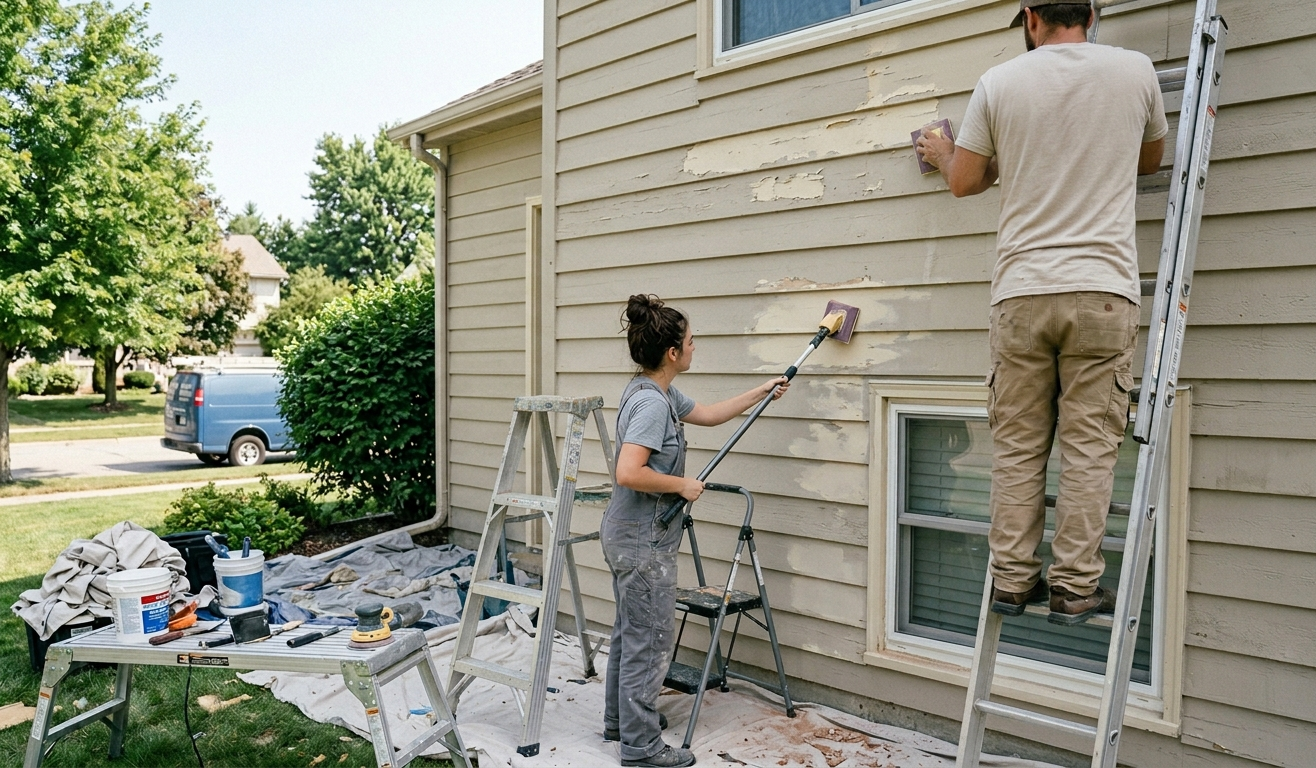
Stucco is one of the most common exteriors in Chico, Oroville, and across the North Valley, and it holds up well in our dry, sunny climate. But stucco is also the exterior that most often gets painted the wrong way. Cracks get painted over without repair, white crusty deposits get covered instead of fixed, and coatings get chosen without thinking about how the wall needs to breathe. We have covered the basics before. Our post on how long exterior paint lasts in Chico explains how stucco ages in the sun, and our guide to latex vs oil paint explains why 100% acrylic is the safe choice for stucco’s high alkalinity. This guide goes deeper into the practical decisions: which cracks you can paint over and which need repair, when an elastomeric coating makes sense, how to deal with efflorescence, and how to paint stucco in North Valley heat.
Quick Answer: How Do You Paint Stucco So It Lasts?
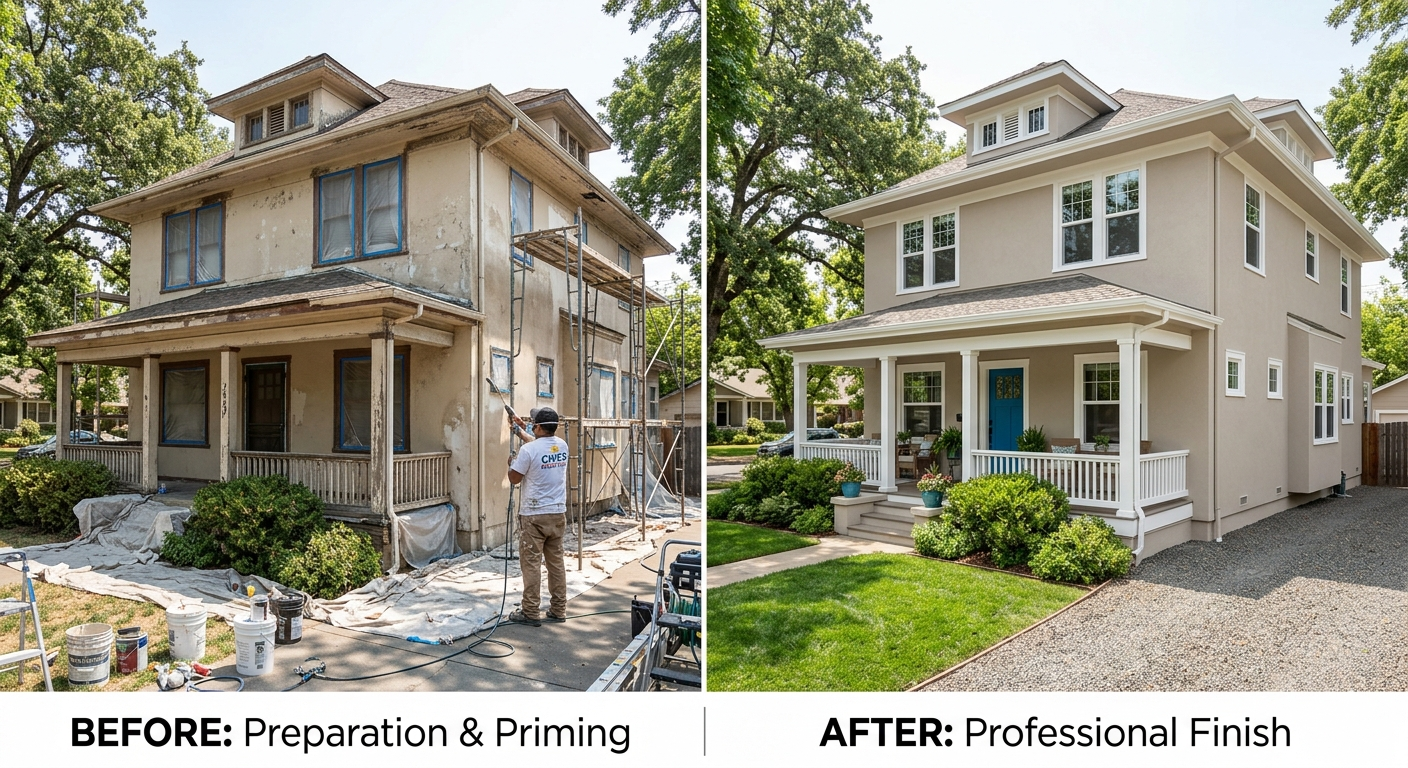
Clean the wall gently, find and fix any water problems, repair cracks based on their size, remove efflorescence, prime patches and bare areas with a masonry primer, then apply a breathable 100% acrylic or, where appropriate, an elastomeric coating in two coats. Work it into the texture and avoid painting walls that are in hot, direct sun.
Step 1: Read the Cracks
Almost every stucco wall has cracks. The key is telling the harmless ones from the ones that need more than paint. Stucco manufacturer Sto Corp’s stucco repair and maintenance guide groups cracks by width:
Crack type Approximate width Typical repair before painting
Hairline Up to about 1/32 inch Two coats of a smooth elastomeric patching coat, brushed or rolled into the crack
Moderate Up to about 1/8 inch Fill with a flexible, knife-grade crack filler, or reinforce with mesh embedded in a base coat
Larger or recurring Wider than 1/8 inch, Find the cause first.
or cracks that keep coming back These may need stucco repair or a professional assessment
A credit card makes a handy gauge. If the edge slips easily into the crack, it is more than hairline.
Cracks That Need a Closer Look
Some crack patterns point to movement in the structure or water getting behind the stucco. Have them checked before painting if you see:
- Cracks wider than about 1/8 inch, or cracks that have grown since you last noticed them
- One side of the crack sitting higher or lower than the other
- Diagonal cracks running from the corners of windows and doors that keep reopening after repair
- Cracks with staining, bulging, soft or hollow-sounding stucco nearby
Sto Corp notes that stresses from the building structure can transfer into the stucco and cause cracking, and recommends hiring a qualified professional to diagnose the problem when in doubt. Paint, even a thick elastomeric, will not fix a structural or drainage problem.
Step 2: Choose the Right Coating: Acrylic or Elastomeric?
Both are water-based coatings used on stucco, but they behave very differently.
100% acrylic exterior paint is the standard choice for most stucco homes. Acrylic finishes designed for stucco are very vapor-permeable, meaning moisture inside the wall can escape through the paint. They come in a full range of colors and sheens and are easy to repaint later.
Elastomeric coatings are applied much thicker and stretch, so they can span small cracks and keep water from getting in through them. That makes them attractive for walls with lots of hairline cracking.
The trade-off is breathability. The Northwest Wall and Ceiling Bureau’s technical guidance on painting stucco warns that elastomeric coatings are typically very low in vapor permeability and can trap moisture in the wall. It recommends coatings with a perm rating of 7 or higher for stucco, and says elastomerics work well on stucco systems with good flashing and drainage, but should not be used to solve a water intrusion or flashing problem. They can also be difficult to remove or change color later.
100% acrylic Elastomeric
Crack bridging Fills very fine cracks Spans hairline and small cracks
Breathability High Typically low
Film thickness Standard Much thicker
Repainting later Easy Harder; can be difficult to remove
Best for Most stucco homes Walls with lots of hairline cracking, good in good condition flashing and drainage, no moisture issues
A sensible approach: use a breathable 100% acrylic system on most homes, and use elastomeric patching coats on individual hairline cracks. A full elastomeric coating can be the right choice on a heavily cracked wall, but only after checking that water is not getting in behind the stucco.
Step 3: Deal With Efflorescence
Efflorescence is the white, chalky or crusty deposit that sometimes appears on stucco, often near the ground, below windows or around sprinklers. Sto Corp explains that it forms when water gets into the stucco, dissolves natural minerals in the cement and carries them to the surface, where they are left behind as the water evaporates.
That makes efflorescence a moisture warning, not just a stain. Before painting:
- Find the water source. Common culprits in the North Valley are sprinklers hitting the walls, soil or mulch piled against the base of the wall, leaking gutters and downspouts, and failed caulk around windows.
- Fix the source, for example by redirecting sprinklers and pulling soil back from the wall.
- Remove the deposits. Efflorescence can usually be removed by light washing with a cleaning agent. Sto suggests vinegar and warm water as a household option, tested on a small area first, and warns against heavy abrasion.
- Prime with a masonry primer before painting.
According to Sherwin-Williams, moisture can reactivate stucco’s alkalinity and lead to efflorescence, blistering, and peeling of paint. If you paint over efflorescence without stopping the water, it will usually push the new paint off.
Step 4: Prep and Patching
Good stucco prep follows this order:
- Clean gently. Stucco is easy to damage with high pressure. Sto recommends staying around 200 to 500 psi with the nozzle held several feet from the wall, and never exceeding 500 psi. Let the wall dry fully before painting.
- Remove loose and failing paint and any heavy chalk so the new coating bonds to a solid surface.
- Repair cracks using the methods in Step 1.
- Patch holes and damaged areas, matching the surrounding texture as closely as possible. A patch with a different texture will show through the paint.
- Prime patches and bare stucco. New patching material is more alkaline and absorbs paint differently from the old wall. Priming it with a masonry primer helps prevent patches from showing as dull or shiny spots.
- Caulk around windows, doors and penetrations with a flexible exterior sealant, where the stucco meets other materials.
Painting New Stucco or Fresh Patches
New stucco is highly alkaline. Sherwin-Williams says new surfaces should usually cure about 30 days before painting, following the supplier’s recommendations, though some masonry primers allow painting sooner once the surface tests below a certain pH. Ask your painter which primer they are using and how long the stucco or patches need to cure first.
Step 5: Painting Stucco in North Valley Heat
North Valley summers are hard on stucco jobs. Stucco walls in direct afternoon sun get much hotter than the air around them, and paint applied to a hot wall dries too fast. That can cause lap marks, poor bonding, and a thin, patchy finish.
- Follow the sun. Paint each wall after the sun has moved off it. Start with west-facing walls in the morning and east-facing walls in the afternoon.
- Check the label. Every product lists a temperature range for both air and surface. Stay within it.
- Watch for wind. Dry, gusty days speed up drying and blow dust onto wet paint.
- Allow enough cure time before evening sprinklers or rain hit the wall.
Application: Get Paint Into the Texture
Stucco’s texture has deep pockets that a quick pass will miss. Many professionals spray the coating and then back-roll it, going over the wet paint with a thick-nap roller to work it into the texture. Two coats give even color and the film thickness needed for durability. Follow the manufacturer’s spread rate; stucco uses noticeably more paint per square foot than smooth siding.
Keep Your Stucco Paint Job Lasting
Keep sprinklers aimed away from the walls
Keep soil and mulch a few inches below the bottom edge of the stucco
Wash gently every year or two to remove dust and chalk
Recaulk around windows and doors when caulk cracks
Check for new cracks each spring and fix them while they are small
Frequently Asked Questions
Can I paint over cracked stucco?
You can paint stucco with small cracks, but the cracks should be evaluated and repaired before the finish coats are applied. Hairline cracks may be treated with a compatible masonry patch, sealant, or coating system designed to bridge minor surface movement. Wider, deeper, stair-step, or recurring cracks deserve closer attention because paint will not correct movement, moisture intrusion, or structural problems beneath the surface. Cracks can also show through a new coating when preparation is incomplete. Before painting, the stucco should be clean, dry, stable, and free of loose material. The repair product and topcoat must also be compatible, so follow the manufacturers’ instructions for preparation, application, and curing.
Is elastomeric paint better for stucco?
Elastomeric paint is not automatically better for every stucco home. Its thicker, flexible film can bridge certain hairline cracks and help resist wind-driven rain, making it useful for some masonry surfaces. However, the wall must be properly prepared, dry, and free from unresolved moisture problems before it is coated. Products also differ in flexibility, film thickness, vapor permeability, application requirements, and permitted substrates. A masonry-compatible 100% acrylic coating may be more suitable when crack bridging or added water resistance is not the primary concern. The best choice depends on the stucco’s condition, existing coating, drainage, exposure, and the technical specifications of the complete primer and finish system.
What is the white powder on my stucco?
The white powder on stucco is usually efflorescence, which is a salt-like deposit left behind when moisture moves through masonry and evaporates at the surface. It should not simply be covered with paint because it can indicate ongoing water movement and may interfere with coating adhesion. First, look for possible moisture sources such as leaking gutters, damaged flashing, irrigation overspray, cracks, or poor drainage near the wall. After addressing the source, remove the deposits using a method approved for the stucco and selected coating system. The surface should then be rinsed when required, allowed to dry fully, and evaluated before primer or paint is applied.
How much does it cost to paint stucco?
Stucco painting costs vary according to the home’s size, wall condition, access, repairs, preparation, coating system, and number of coats. Angi’s current national guide estimates professional stucco painting at approximately $1.80 to $3.60 per square foot, with typical total costs of about $3,600 to $7,200. These are broad national estimates, not a guaranteed price for a Chico home. Extensive crack repairs, peeling coatings, efflorescence, difficult access, detailed trim, or an elastomeric system can increase the scope and cost. Ask for a written estimate that separates repairs, preparation, primer, finish coats, and exclusions. See our guide to what it costs to paint a house exterior in Chico for a more detailed explanation.
Stucco Painting in Chico and the North Valley
At SGB Custom Painting, we inspect stucco walls for cracks, moisture, and efflorescence before recommending a coating, so the paint job lasts. Contact us to book a free estimate for exterior painting, or start with our Painting Cost Estimator.
About SGB Custom Painting
SGB Custom Painting is a trusted Chico Painting Contractor known for clean prep, clear communication, and color that holds. For more than twenty five years, our local team has delivered interior, exterior, and cabinet projects for homes and businesses with careful protection, proper priming, and tidy jobsites. We follow EPA lead safe practices on older properties, keep schedules dependable, and give every project the respectful touch the North Valley deserves.

Love Your Space Again, Starting Today!
Locally Owned & Operated • EPA Lead Safe Certified • CSLB Licensed
Call 530-924-4109 or complete the form and expect a friendly call to confirm scope, discuss color options if needed, and deliver a no surprise estimate you can approve with confidence.
Contact Us
Refresh Your Home With Professional Painting
If you are thinking about repainting your interior, freshening up exterior siding, updating tired kitchen cabinets, or giving your business a cleaner look, our team is here to help you plan it right and paint it to last. Reach out to SGB Custom Painting to talk through your project, get honest expert guidance, and take the next step toward a home or workspace you will be proud of every day.
Follow Us
Elevate Your Space with SGB Custom Painting