SGB Custom Painting Blog
How Often Should You Repaint a Commercial Building?
Frank White • October 15, 2026 | Chico, CA | USA
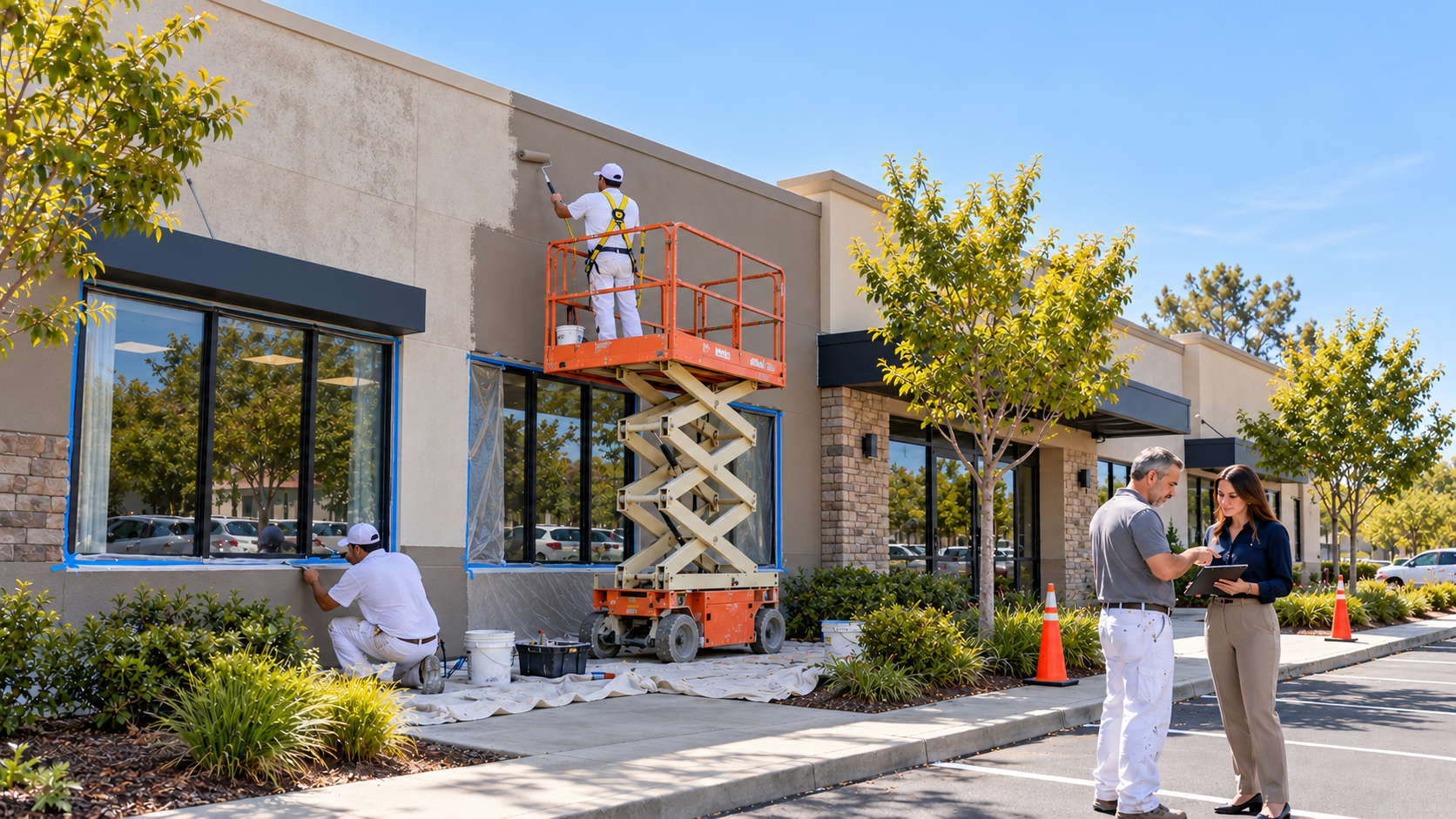
Commercial paint rarely wears evenly. A quiet office may still look presentable while the lobby, corridors, restrooms, and exterior doors show scuffs, fading, or peeling. Knowing how often to repaint a commercial building starts with dividing the property into use areas because traffic, cleaning, moisture, sunlight, equipment, and customer expectations affect each surface differently. Our commercial painting services support offices, retail properties, warehouses, and other facilities in Chico and the North Valley.
Quick Answer: How Often Should a Commercial Building Be Repainted?
Well-maintained commercial interior walls often last five to ten years, but entrances, corridors, and other high-traffic areas usually need attention much sooner. Exterior timing depends on sun, heat, rain, and the surface material, so inspect each area every year and repaint based on its condition, not its age.
Why Do Commercial Spaces Wear Faster Than Homes?
Commercial buildings concentrate traffic through the same entrances, corridors, and work areas. Hands touch frames, carts scrape corners, and equipment bumps walls. Frequent cleaning can also leave dull or polished patches when the cleaner, scrubbing method, or coating is not suited to the space. Paint may still be intact but no longer match current signage or brand standards. That makes customer-facing areas a higher priority than low-visibility storage walls with similar wear.
What Are Typical Repaint Ranges for Different Areas?
The guidance below is a planning starting point rather than a guaranteed coating lifespan. Review each area at least once a year and adjust the cycle based on wear, cleaning, surface condition, preparation, and the coating system used.
Lobbies, Entrances and Customer-Facing Areas
Lobbies, entrances, and reception areas usually need attention well before low-traffic interior walls because they receive constant use and remain highly visible. Check doors, frames, corners, and walls near seating for scuffs, fading, and outdated brand colors. Give these spaces priority when their condition begins affecting the impression customers receive.
Corridors and High-Traffic Walls
Corridors also tend to wear sooner than the general five-to-ten-year range for interior walls. Narrow hallways used by carts, deliveries, or maintenance equipment often show damage around corners, switches, lower wall sections, and door openings. Wall guards can reduce impact, but regular inspection is still necessary. Give corridors their own inspection and repaint cycle instead of tying them to one schedule for the entire building.
Offices and Conference Rooms
Private offices and conference rooms can track closer to the general five-to-ten-year interior range when traffic is moderate, and the walls are cleaned carefully. Shared offices, training rooms, and frequently rearranged spaces may wear faster because furniture, chairs, mounting hardware, and technology changes leave marks. Tenant changes, reconfiguration, or a brand update can also create a reason to repaint before the coating fails.
Break Rooms, Restrooms and Food Preparation Areas
Break rooms, restrooms, and food-preparation areas need frequent inspection around sinks, counters, trash containers, and hand-drying stations. Moisture, residue, repeated cleaning, and cleaning products can make wear appear sooner. Do not use paint to hide a leak, condensation, or damaged material. Correct the moisture source first, then determine whether the area needs cleaning, repair, spot priming, or repainting. Any sanitation requirements for the facility should guide coating selection and maintenance.
Warehouses, Stockrooms and Loading Areas
Warehouses and stockrooms may stay serviceable longer when appearance demands are modest, and surfaces remain protected. Loading areas, aisle ends, columns, and walls exposed to pallets or equipment usually need localized work sooner. A full repaint may be unnecessary when damage is limited to doors, loading points, and travel lanes. Maintain safety markings and equipment zones whenever fading or damage reduces visibility.
Exterior Walls and Trim
Commercial exterior walls often fall within a five-to-ten-year planning range, but exposure can shorten or extend that cycle. Direct afternoon sun, rain, failed sealant, and the condition of stucco, wood, masonry, or metal all matter. Trim, fascia, and doors may need attention before the main walls. Our article on how long exterior paint lasts in Chico explains the local exposure factors in more detail.
Metal Doors, Railings and Roll-Up Doors
Inspect painted metal at least annually and address rust, chips, and exposed areas promptly. Outdoor metal may fall within a five-to-ten-year recoating range, but repeated handling, impact, and moisture can shorten it. Once the coating breaks, corrosion can spread beneath the surrounding finish, so condition matters more than the calendar.
How Does North Valley Weather Affect Exterior Paint?
North Valley sun and summer heat can fade color and stress exposed coatings, while dust makes trim, ledges, and textured walls look dull. During the wet season, rain can enter cracks, open joints, and peeling edges. Correct failed sealant, damaged flashing, or active leaks before repainting. Our guide to the best time of year for exterior painting in Chico explains why surface temperature, rain, overnight conditions, and product instructions matter more than the month alone.
What Signs Show That a Commercial Building Is Due?
A building may need repainting before it reaches the end of a planned cycle. Regular inspections help identify small problems while touch-ups or targeted repainting are still practical.
Watch for:
- Scuffs and marks that no longer come off with appropriate cleaning
- Faded or uneven color in customer-facing areas
- Chalking that leaves a powdery residue on exterior surfaces
- Peeling, blistering, cracking, or flaking paint
- Rust appearing on doors, railings or other metal
- Water stains or recurring discoloration
- Patched areas that no longer blend with the surrounding wall
- Colors that no longer match current signs or brand standards
- Damaged caulk, exposed surface material, or worn edges
Stains deserve investigation before they are covered. A recurring mark beneath a roofline, window, or plumbing fixture could indicate an unresolved moisture source. Repainting without correcting the cause usually leads to another visible problem.
When Is a Touch-Up Enough?
Touch-ups make sense when damage is limited, the coating remains firmly bonded, and the original color can still be matched. A full repaint is better when wear is widespread, the color has faded, or earlier repairs look patchy. Keep labeled paint for major areas and record the product, color, sheen, purchase date, and location. Because paint changes with cleaning and light exposure, stored paint may not blend perfectly with an older wall.
How Can Repainting Fit Into a Maintenance Budget?
A commercial property does not need to be repainted all at once. Phase work over several budget years, starting with entrances, lobbies, and customer areas. Corridors, restrooms, and shared employee spaces can follow, while sound private offices and low-visibility storage walls may wait.
A useful record should include:
- Color and sheen for each area
- Product and primer used
- Date of the last repaint
- Repairs completed before painting
- Areas receiving frequent touch-ups
- Photographs showing condition after completion
- Notes about cleaning products or recurring damage
Your records eventually become more useful than a generic schedule because they show how each part of the building actually wears. Use that history to adjust future repaint cycles and budget priorities.
What Should You Know About Paint in Older Buildings?
Commercial buildings constructed before 1978 may contain lead-based paint, but the EPA Renovation, Repair and Painting Rule does not cover every commercial property. It applies to pre-1978 housing and qualifying child-occupied facilities. Other worker-safety or local requirements may still apply, so confirm which rules govern the property before disturbing older coatings.
Frequently Asked Questions
How Often Should a Retail Store Be Repainted?
A retail store should typically be evaluated for repainting every two to four years in customer-facing and high-traffic areas. Entrances, checkout lines, fitting rooms, aisle ends, and walls near displays may need touch-ups sooner because carts, fixtures, and customers repeatedly contact them. Back offices and low-traffic stock areas may remain presentable longer. The right schedule also depends on cleaning frequency, coating quality, wall protection, and brand requirements. Inspect the store regularly instead of waiting for a fixed anniversary. If the paint is still sound but the space looks faded or no longer matches current signs and displays, a visual refresh may be appropriate before physical coating failure occurs.
How Long Does Commercial Exterior Paint Last?
Commercial exterior paint may remain serviceable for roughly five to ten years, but that range can change substantially with exposure and substrate condition. Strong sun, high surface temperatures, seasonal rain, dust, poor drainage, and failed sealant can shorten the cycle. Stucco, wood, masonry, and metal also weather differently. Preparation and coating compatibility matter as much as the finish paint itself. Inspect the exterior annually for fading, chalking, peeling, cracking, rust, and exposed material. Different sides of the building may need attention at different times, so repainting one elevation or a group of vulnerable components can sometimes be more practical than waiting to repaint the entire property.
Is It Cheaper to Touch Up or Repaint?
Touching up is generally less expensive when the damage is small, the existing coating is sound, and the stored paint still blends acceptably. It can be a practical response to a scraped corner, repaired hole, or isolated mark. Touch-ups become less effective when fading, scuffing, or previous repairs cover a large portion of the wall. New paint can also appear different from the aged surface because of light exposure, cleaning, and changes in sheen. At that point, repainting the complete wall or room may produce a more consistent result. Compare the labor required for repeated patching with the scope of a planned repaint before deciding which option offers better value.
What Time of Year Is Best for Commercial Exterior Painting?
The best time is a period when surface temperature, air temperature, humidity, wind, and rain remain within the selected coating manufacturer’s requirements. Spring and fall often provide useful working conditions in Chico, but no month guarantees suitable weather every day. Summer work may require careful management of direct sunlight and hot surfaces, while winter projects can face shorter drying windows and rain delays. The building’s orientation also matters because one elevation may remain shaded while another becomes too hot. Plan around current forecasts and actual surface conditions rather than choosing a season alone. Product instructions should determine when application and drying conditions are acceptable.
Build Repainting Into Your Property Plan
A useful repaint schedule treats each part of the building according to its traffic, exposure and importance to customers. Annual inspections, accurate coating records and phased maintenance can help you address worn areas before deterioration becomes widespread.
At SGB Custom Painting, we help property owners plan repainting around the way each building is used. Learn more about our commercial painting in Chico and the North Valley, or contact us to discuss the current condition of your property.
About SGB Custom Painting
SGB Custom Painting is a trusted Chico Painting Contractor known for clean prep, clear communication, and color that holds. For more than twenty five years, our local team has delivered interior, exterior, and cabinet projects for homes and businesses with careful protection, proper priming, and tidy jobsites. We follow EPA lead safe practices on older properties, keep schedules dependable, and give every project the respectful touch the North Valley deserves.
Love Your Space Again, Starting Today!
Locally Owned & Operated • EPA Lead Safe Certified • CSLB Licensed
Call 530-924-4109 or complete the form and expect a friendly call to confirm scope, discuss color options if needed, and deliver a no surprise estimate you can approve with confidence.
Contact Us
Refresh Your Home With Professional Painting
If you are thinking about repainting your interior, freshening up exterior siding, updating tired kitchen cabinets, or giving your business a cleaner look, our team is here to help you plan it right and paint it to last. Reach out to SGB Custom Painting to talk through your project, get honest expert guidance, and take the next step toward a home or workspace you will be proud of every day.
Follow Us
Elevate Your Space with SGB Custom Painting