SGB Custom Painting Blog
Painting a Rental Property Between Tenants: A Landlord’s Guide
Frank White • November 11, 2026 | Chico, CA | USA
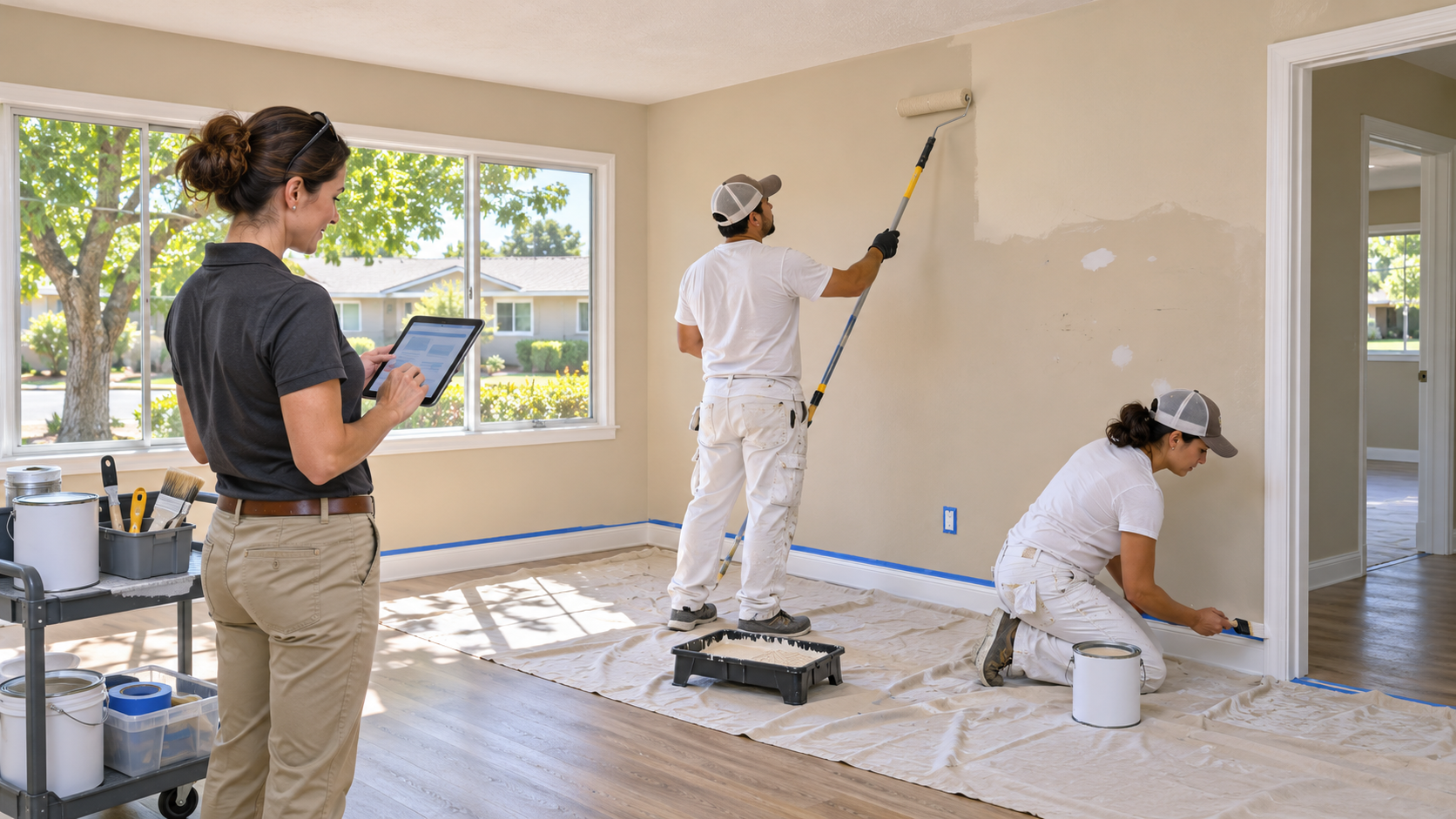
The gap between tenants is usually the best time to repair and repaint a rental. The unit is empty, the walls are easy to reach, and we can work without scheduling around anyone’s furniture or daily routine.
That doesn’t mean every wall needs a fresh coat. The smart way to handle a turnover is to decide what can be touched up, what needs a full repaint, and what has to be repaired first. A clear plan keeps interior painting on schedule without covering up damage that needs attention.
Quick Answer: How Should You Paint a Rental Between Tenants?
Inspect the empty unit, sort walls into touch-ups, full repaints, and repairs, and fix damage before any paint goes on. Use one standard neutral color with a written record of the product and sheen, and leave enough drying time before cleaners or the next tenant moves in.
Touch-Ups or a Full Repaint?
Touch-ups make sense when the existing paint is sound and only a few spots are marked. Small nail holes, light furniture scuffs, and marks around light switches can often be fixed without repainting the whole room, as long as you have the original paint. The touch-up paint has to match the color, product, and sheen. Even the right color can stand out if the wall has faded, the original was rolled, and the touch-up was brushed, or years of cleaning have changed the finish.
A full repaint is usually the better choice when there are scuffs everywhere, multiple patches, fading, stains, or a patchwork of touch-ups from earlier turnovers. Peeling, bubbling, or poor adhesion needs more than a spot repair. In student rentals near Chico State, hallways, living rooms, and bedrooms often take a beating from frequent move-ins and move-outs. There’s no set schedule for repainting a rental. Room use, paint quality, sunlight, cleaning, and turnover all affect how long interior paint lasts in each unit.
What Should You Check After Move-Out?
Walk the unit once it’s empty and well lit. Start with the walls near where the beds, desks, couches, and dining table were, since that’s where rubbing and dents happen. Check corners, baseboards, doors, and window trim for chips you can’t see from the middle of the room. Nail holes and small picture hooks are easy to patch. Larger wall anchors can tear the drywall paper around them, and those spots need careful repair, sealing, and texture matching before paint.
Never just paint over a water stain. A stain under a window, around a bathroom fixture, or below an upstairs pipe means there’s a moisture source that has to be found and fixed first. Soft drywall, crumbling sections, and failed patches need to be cut out and repaired. Paint hides those problems for a while, but it doesn’t fix them.
What Colors and Finishes Work Best in Rentals?
Pick one neutral and stick with it. Using the same wall color across all your units means you always have matching paint on hand, touch-ups are simple, and you never have to choose a new color at turnover. The neutral doesn’t have to be stark white. A warm off-white, light greige, or soft neutral works with most flooring, countertops, and tenant furniture. What matters is that it looks clean in the unit’s natural and artificial light and that you can repeat it exactly.
Rental walls also need a finish that holds up to cleaning. Kitchens, bathrooms, hallways, and other high-touch areas need a tougher, more washable paint than low-traffic bedrooms.
Keep a Paint Record for Every Unit
A paint record takes the guesswork out of the next turnover. For each room or surface, write down the color name, color code, manufacturer, product line, sheen, and the date it was painted. Don’t just record the color. Two different products in the same color can have a different sheen and texture, and touch-ups won’t blend. Note whether each entry is for walls, ceilings, trim, doors, or cabinets, since those often use different paints.
Label leftover cans with the property, unit, room, and date. Before you use stored paint, check that it’s still good and still matches the wall. A simple shared spreadsheet helps when more than one person handles maintenance.
How Can You Speed Up the Turnaround?
Book your painter before the move-out date, then confirm the final scope once the unit is empty. Furniture and belongings often hide damage that changes how much prep is needed.
Plan the order of work with your other trades. Plumbing leaks, electrical work, and drywall replacement should be done before we finish painting. Walls may need a basic cleaning before prep, but the final deep clean makes the most sense after repairs and painting are done.
Flooring takes some coordination. Painting before new flooring goes in reduces the risk of drips on a new floor, but tearing out old flooring can create dust and damage freshly painted baseboards. Agree with the flooring installer on the order of work before the turnover starts.
Keep the unit empty until the paint is ready for normal use. Dry to the touch isn’t the same as cured, so we’ll let you know when the walls can be cleaned and furniture can go against them.
What Lead-Safe Rules Apply to Older Rentals?
If your rental was built before 1978, the federal lead-safe painting rule can apply whenever work disturbs painted surfaces. Paid contractors doing that work must be certified and follow lead-safe practices. And the exemption that lets homeowners work on their own homes doesn’t cover landlords: if you rent out all or part of the property, the rule applies to you too.
Don’t start scraping or sanding in an older rental until you know how the rule applies to your project. Lead-safe painting involves containment, careful cleanup, and checking that the area is clean before anyone moves back in.
Can You Deduct Repainting From the Security Deposit?
In California, landlords generally can’t deduct ordinary wear and tear from a security deposit. The California Courts self-help guide to security deposits explains that deductions can cover damage beyond normal wear, but not the effects of everyday use. A routine repaint because the walls have aged is different from repairing damage a tenant caused. Photograph the unit before and after every tenancy, keep invoices, and separate routine maintenance from tenant-caused repairs. We’re painters, not attorneys, so check with a California landlord-tenant professional before making deductions.
Don’t Forget the Outside
Turnover is a good time to walk around the outside and look for peeling paint, bare wood, failed caulk, fading, or damaged trim. Staying on top of exterior paint protects the building and helps the property look its best in listing photos and showings.
Frequently Asked Questions
How often should a rental property be repainted?
Repaint when the condition calls for it, not on a fixed schedule. Some rooms look fine through several tenancies, while busy hallways may need attention every turnover, and move-in and move-out photos make it easy to tell routine aging from new damage.
What paint color is best for a rental property?
A repeatable neutral that works with the unit’s floors, counters, and lighting, such as a warm off-white or light greige. Use the same color across similar units so touch-ups are simple, and you’re not left with half-empty cans of different colors.
Can a landlord charge a tenant for repainting?
In California, only for repainting needed because of damage beyond ordinary wear and tear, not for walls that have simply aged. You also shouldn’t charge for repainting a whole unit because one wall was damaged, and good move-in and move-out records make any charge much easier to support.
Do I need a lead-safe certified painter for an older rental?
In most cases, yes, if the rental was built before 1978 and the work disturbs more than a small area of painted surface. Landlords don’t qualify for the homeowner exemption, so check the building’s age and the painter’s certification before any scraping or sanding starts.
Get Your Unit Ready for the Next Tenant
A smooth turnover starts with a careful inspection, the right repairs, and a realistic schedule. Standard colors, good paint records, and a clear written scope make every future turnover easier. You can read what our customers say about working with us on our Google Business Profile. To see everything else we do, start at our home page. If you have a rental in Chico or the North Valley coming up for turnover, get in touch. We’ll walk the unit with you, point out what needs attention, and put together a clear painting scope.
About SGB Custom Painting
SGB Custom Painting is a trusted Chico Painting Contractor known for clean prep, clear communication, and color that holds. For more than twenty five years, our local team has delivered interior, exterior, and cabinet projects for homes and businesses with careful protection, proper priming, and tidy jobsites. We follow EPA lead safe practices on older properties, keep schedules dependable, and give every project the respectful touch the North Valley deserves.

Love Your Space Again, Starting Today!
Locally Owned & Operated • EPA Lead Safe Certified • CSLB Licensed
Call 530-924-4109 or complete the form and expect a friendly call to confirm scope, discuss color options if needed, and deliver a no surprise estimate you can approve with confidence.
Contact Us
Refresh Your Home With Professional Painting
If you are thinking about repainting your interior, freshening up exterior siding, updating tired kitchen cabinets, or giving your business a cleaner look, our team is here to help you plan it right and paint it to last. Reach out to SGB Custom Painting to talk through your project, get honest expert guidance, and take the next step toward a home or workspace you will be proud of every day.
Follow Us
Elevate Your Space with SGB Custom Painting