SGB Custom Painting Blog
How to Read a Painting Estimate Line by Line
Frank White • May 10, 2026 | Chico, CA | USA
You asked three painters for a quote and got three very different numbers. One is a single line that says “Paint exterior of house – $6,800.” Another runs two pages. The third sits somewhere in between and costs $2,000 more than the first. The gap is almost never random. Painting estimates differ because they describe different jobs: different prep, different products, a different number of coats, and different things left out. Once you know what each line should tell you, you can see what you are actually paying for and compare quotes fairly. This guide walks through a painting estimate one section at a time. If you are still deciding who to ask for a quote, start with our guide on how to pick a painting contractor, then come back here once the estimates arrive.
Quick Answer: What Should a Painting Estimate Show?
A clear painting estimate lists the surfaces being painted, the prep work, the exact paint and primer products, the number of coats, how labor was priced, how repairs are handled, clean-up, the warranty, what is excluded, and the payment terms. If any of these are missing, ask for them in writing before you compare prices.
1. Scope: What Exactly Is Being Painted
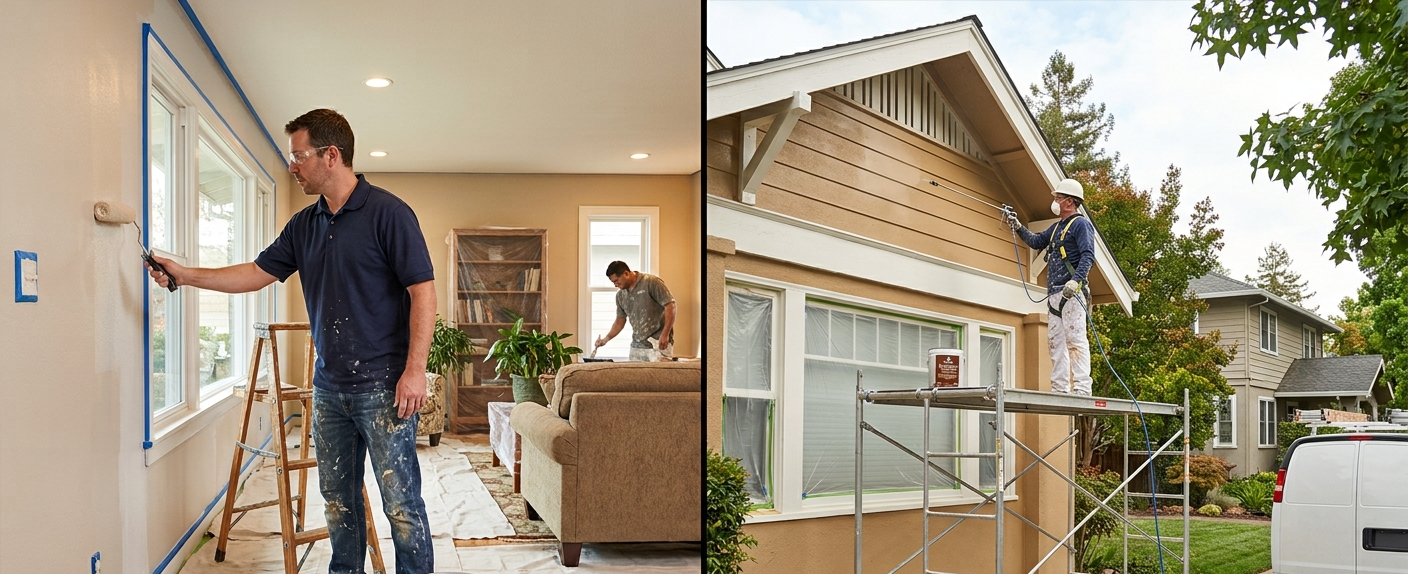
The first section should name every surface included in the price. For an interior, that means each room and whether walls, ceilings, trim, doors, closets and baseboards are included. For an exterior, it means siding, trim, fascia, soffits, doors, shutters, garage doors, railings and any detached structures. Look for measurements or counts, such as square footage of wall area, number of doors or linear feet of trim. Also check how many colors are included. A quote for “interior, 3 bedrooms” with one color is a different job from the same rooms with an accent wall, a contrasting trim color and painted ceilings. What to check: Walk through your home with the estimate in hand. If a surface you expected to be painted is not listed, assume it is not included.
2. Prep: The Line That Explains Most Price Gaps
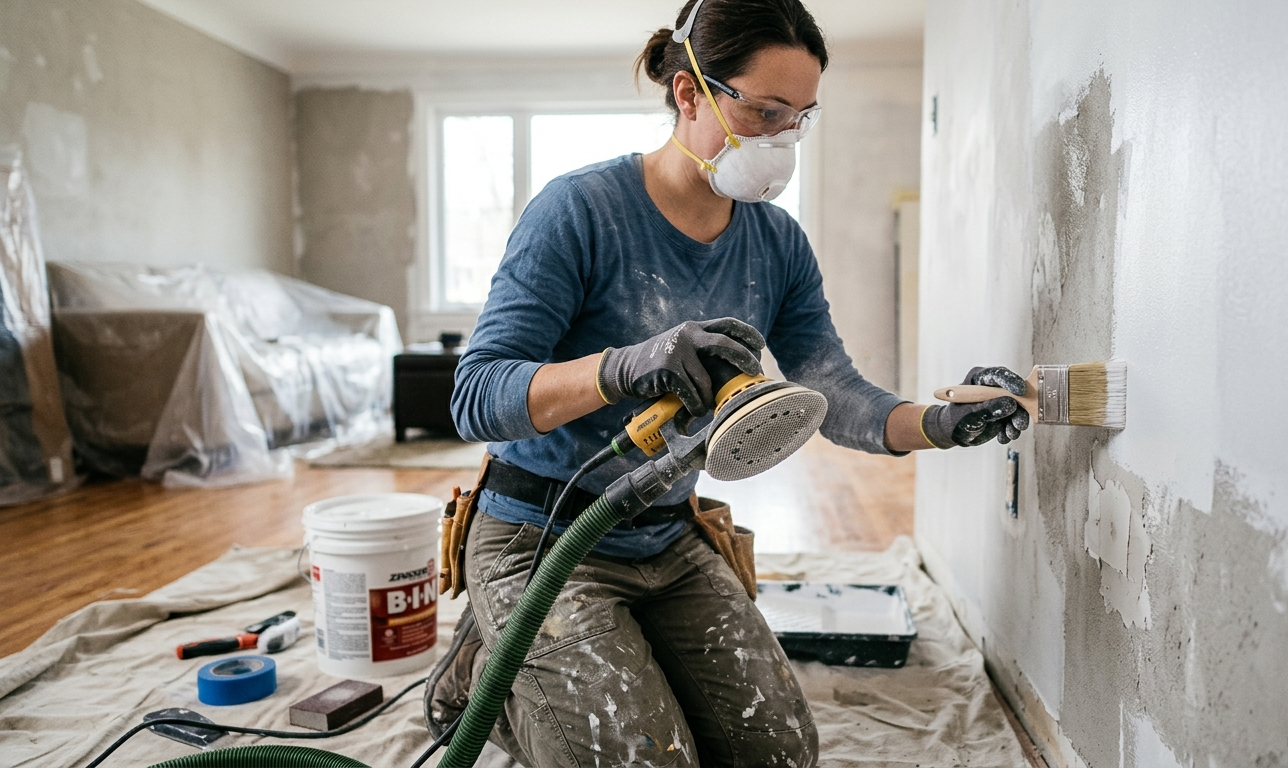
Preparation is where low and high quotes usually split apart, because it takes time and does not show in the finished photo. A vague line like “standard prep” tells you very little.
A good estimate spells out the prep steps for your job, for example:
- Pressure washing or cleaning, and how long surfaces dry before painting
- Scraping and sanding loose or peeling paint
- Spot priming bare wood or repaired areas
- Caulking gaps around trim, windows and siding joints
- Patching nail holes, dents and cracks in drywall
- Covering floors, furniture, plants, fixtures and windows
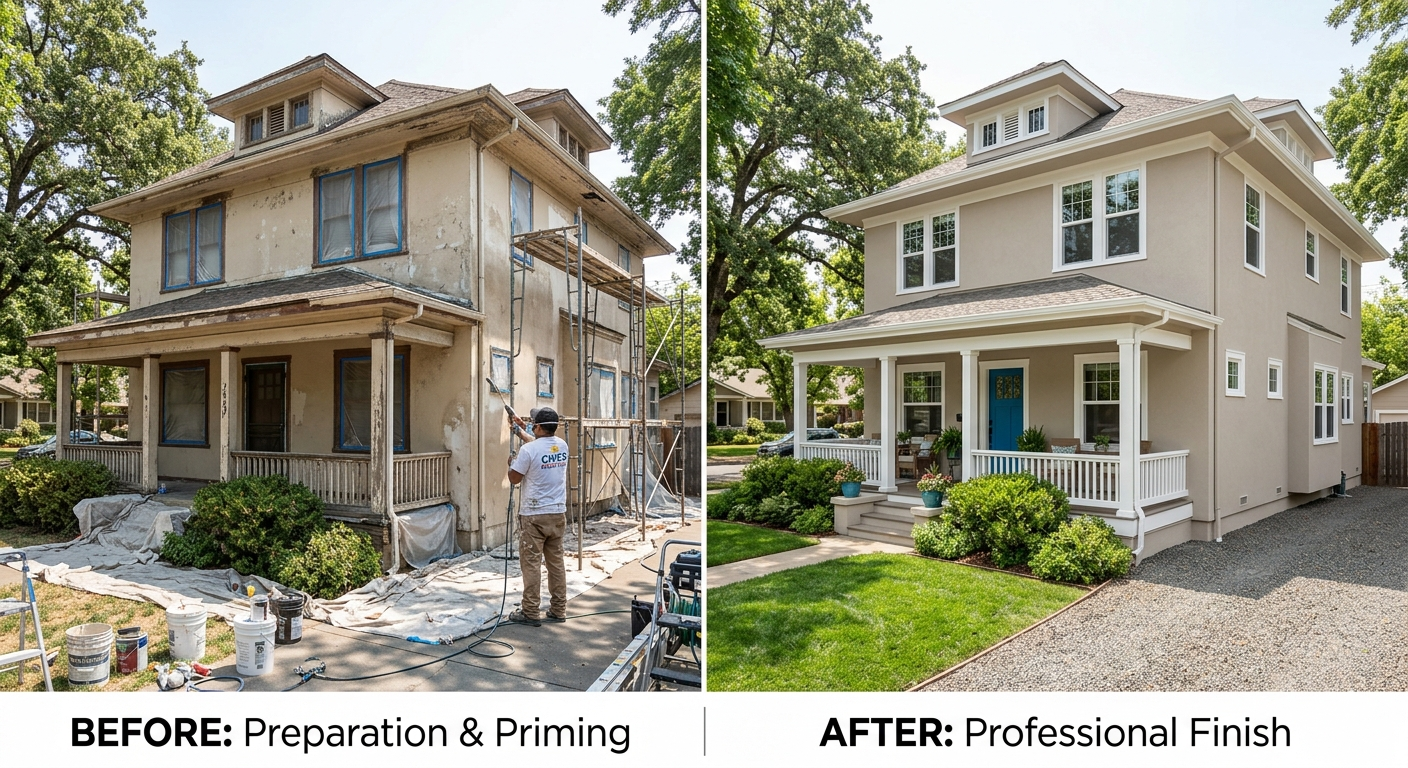
On Chico exteriors, months of sun and heat break down caulk and dry out old paint, so the prep line for an outside job is often longer than for an interior. If one quote lists scraping, priming and caulking and another simply says “prep,” that difference alone can explain a large price gap. Our essential guide to paint prep explains why these steps matter.
3. Materials: Product Names, Not “Premium Paint”
“High-quality paint” can mean almost anything. A useful estimate names the brand, the product line and the sheen for each surface, plus the primer being used. California’s consumer guidance for home improvement contracts asks for this level of detail too: brand, model, quality and color of materials. With product names, you can look up the paint yourself and compare like with like. Two quotes that both say “two coats” are not equal if one uses a contractor-grade paint and the other uses a top-tier line built for heat and UV.
What to check:
- Brand and product line for walls, trim and doors
- Sheen for each surface (for example flat ceilings, eggshell walls, semi-gloss trim). Our paint sheen guide shows what suits each room.
- Primer type, and whether it is spot priming or a full coat
- Whether the price includes all materials or charges them separately
4. Number of Coats
The estimate should say how many finish coats each surface gets. One coat costs less but rarely covers evenly, especially over a color change, patched areas, or weathered siding. Two finish coats is the norm for a durable result on most surfaces. Watch the wording. “Two coats” sometimes means one coat of primer and one of paint. Primer is not a finish coat, so ask the painter to list primer and finish coats separately.
5. How Labor Is Calculated
Labor is usually the largest part of a painting estimate, and understanding how it is priced helps the rest of the quote make sense. Most painters base labor on three things.
- Size of the job. More wall area, more rooms, or a larger home means more hours. This is the starting point for every estimate.
- Condition of the surfaces. Peeling paint, cracks, stains and bare wood all add prep time before any paint goes on. Two homes of the same size can have very different labor costs for this reason alone.
- Complexity and access. Trim, doors, window frames, railings, textured surfaces, high ceilings and second-story walls take more precision, more ladder or scaffold work and more time. Detailed cutting-in around trim and color changes adds hours too.
Painters show labor in different ways: some list hours or crew-days, some price per room, and some fold it into a single total. Any of these can be fair. What matters is that you can see roughly how much time is planned for prep compared to painting. A quote that is much cheaper than the others often has fewer hours of prep built in. For a rough idea of what your project might cost before anyone visits, try our Painting Cost Estimator.
6. Repairs: Fixed Price or Allowance
Painters often find damage only once they start scraping or sanding, such as soft wood, rotted trim, or larger drywall cracks. The estimate should say how this is handled. There are three common approaches:
- Fixed price for repairs the painter has already seen and listed
- Unit price for unknown repairs, such as a set price per linear foot of trim replaced
- Allowance, a set budget for repairs that is adjusted up or down once the actual work is known
Any of these works, as long as it is written down. Also confirm that extra repair work will be agreed in writing, with a price, before it is done.
7. Clean-Up and Protection
A good estimate says who removes paint chips, drop cloths, tape, empty cans and debris, and whether the site is cleaned daily or only at the end. It should also say how floors, furniture, landscaping and fixtures will be protected, and who moves furniture and puts it back. Removing and reinstalling outlet covers, light fixtures and hardware should be listed if it is included.
8. Warranty: What It Covers and for How Long
A warranty line should state the length of coverage, what it covers (peeling, blistering or flaking caused by the application, for example) and what it does not cover (such as damage from moisture problems, impact or normal wear). “Fully guaranteed” with no terms is not a warranty you can rely on. Ask for the full warranty in writing with the estimate.
9. Exclusions: The Line Most People Skip
The exclusions section tells you what is not in the price, and it is often where surprise costs come from. Common exclusions include:
- Moving heavy furniture or appliances
- Wallpaper removal
- Wood or drywall repairs beyond what is listed
- Lead paint testing or lead-safe work practices on homes built before 1978
- Permits, if any are required
- Painting inside closets, garages, decks or fences
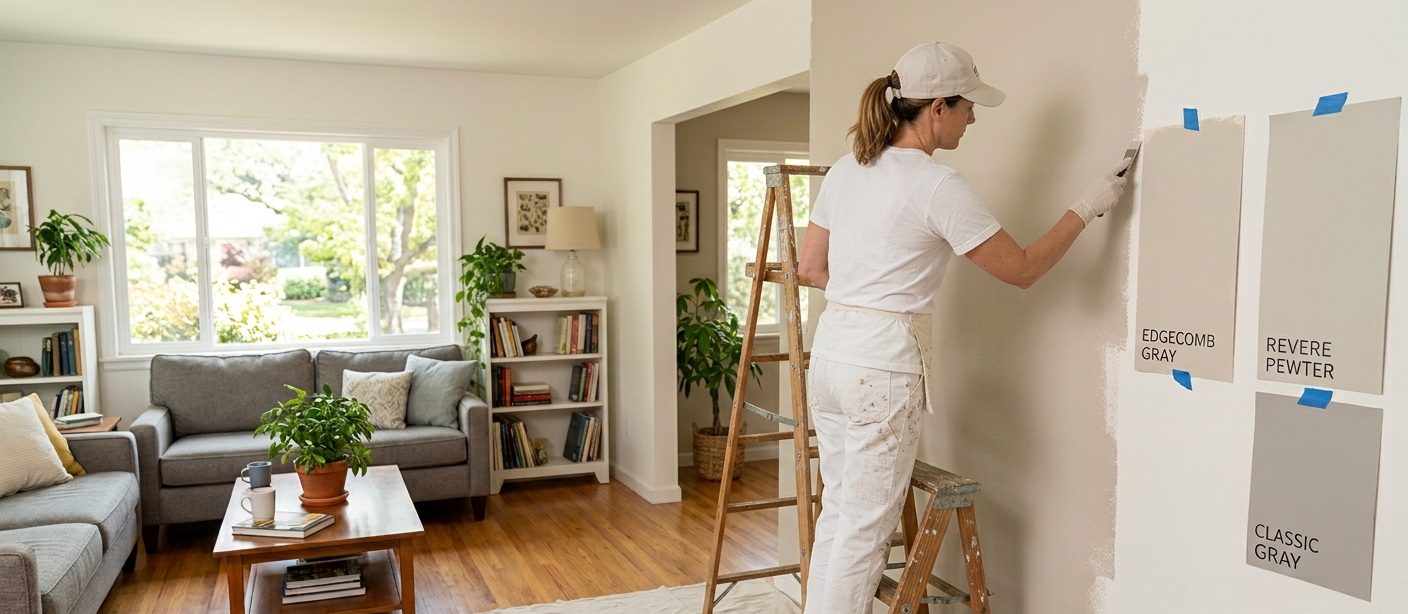
- Color consultation or sample boards
If an estimate has no exclusions section at all, ask what is not included. It is better to know now than to see it on a change order halfway through the job.
10. Payment Terms and License Number
The estimate should show the total price, how payments are split, and what each payment covers. In California, the down payment on a home improvement job cannot be more than $1,000 or 10 percent of the contract price, whichever is less, according to theContractors State License Board. Later payments should not run ahead of the work already finished. The estimate should also show the contractor’s license number. Since January 1, 2025, California requires a license for jobs of $1,000 or more in labor and materials combined. You can check a license number on theCSLB website. See how to do that inhow to pick a painting contractor.
How to Compare Two Estimates Side by Side
Put the estimates next to each other and go through the sections above in order. For each one, write down what each painter included. A simple table works:
Line item Painter A Painter B
Surfaces included
Prep steps listed
Paint brand and product line
Primer and finish coats
Repairs: fixed, unit price or allowance
Warranty length and terms
Exclusions
Total price
Once the details line up, the price difference usually makes sense. If one quote is cheaper because it leaves out prep, uses a lower-grade paint, or skips a coat, you know exactly what you would be giving up.
Red Flags on a Painting Estimate
- A single total with no breakdown
- No paint brand or product named
- No number of coats
- No exclusions, or “everything included” with no detail
- A down payment request above California’s limit
- No license number on the document
- Pressure to sign the same day
Frequently Asked Questions
Why Are Painting Estimates So Different for the Same House?
Painting estimates can differ because each painter may be pricing a different amount of preparation, labor, paint, repairs, and cleanup. One proposal may include extensive scraping, sanding, caulking, patching, priming, and two finish coats, while another covers only basic preparation and one coat. Paint quality, surface condition, access, color changes, crew size, and protection for floors or landscaping can also affect the price. Review each estimate line by line instead of comparing totals alone. Check which surfaces are included, how they will be prepared, how many coats are planned, which products will be used, and what could create an additional charge.
Is a Painting Estimate the Same as a Contract?
No, a painting estimate is not necessarily the same as a signed contract. An estimate generally outlines the proposed work, materials, and expected price based on the conditions visible during the inspection. A contract records the final agreement between you and the painter and should explain the approved scope, payment schedule, responsibilities, exclusions, change-order process, and other project terms. Before work begins, confirm that the important details from the estimate appear in the written contract. Do not rely on verbal promises about repairs, extra coats, colors, cleanup, or scheduling. If something matters to the project, it should be written clearly so both parties share the same expectations.
Should a Painting Estimate Be Free?
Many residential painting companies offer free estimates, but homeowners should confirm this before scheduling the appointment. SGB Custom Painting offers free estimates so the surfaces, project scope, access, and preparation needs can be reviewed before a price is prepared. An in-person visit is often necessary because room dimensions alone do not reveal peeling paint, damaged drywall, failing caulk, stained surfaces, difficult access, or previous coating problems. Ask what the estimate includes and whether design consultations, detailed specifications, testing, or extensive diagnostic work carry separate fees. A free estimate can still be thorough, but it should clearly explain the proposed preparation, paint system, included surfaces, exclusions, and expected cost.
Can I Ask a Painter to Change What Is on the Estimate?
Yes, you can ask a painter to revise the estimate before approving the project. You might choose a different paint product, add another room, request an additional coat, change the color plan, include repairs, or remove part of the original scope. Any change can affect labor, materials, scheduling, and the total price, so request an updated written estimate rather than relying on a verbal agreement. Review the revised version carefully to confirm that the old and new scopes are not being confused. If the project has already started, the adjustment should be documented through a written change order that explains the added or removed work and its effect on cost and timing.
Get a Clear, Itemized Estimate From SGB Custom Painting
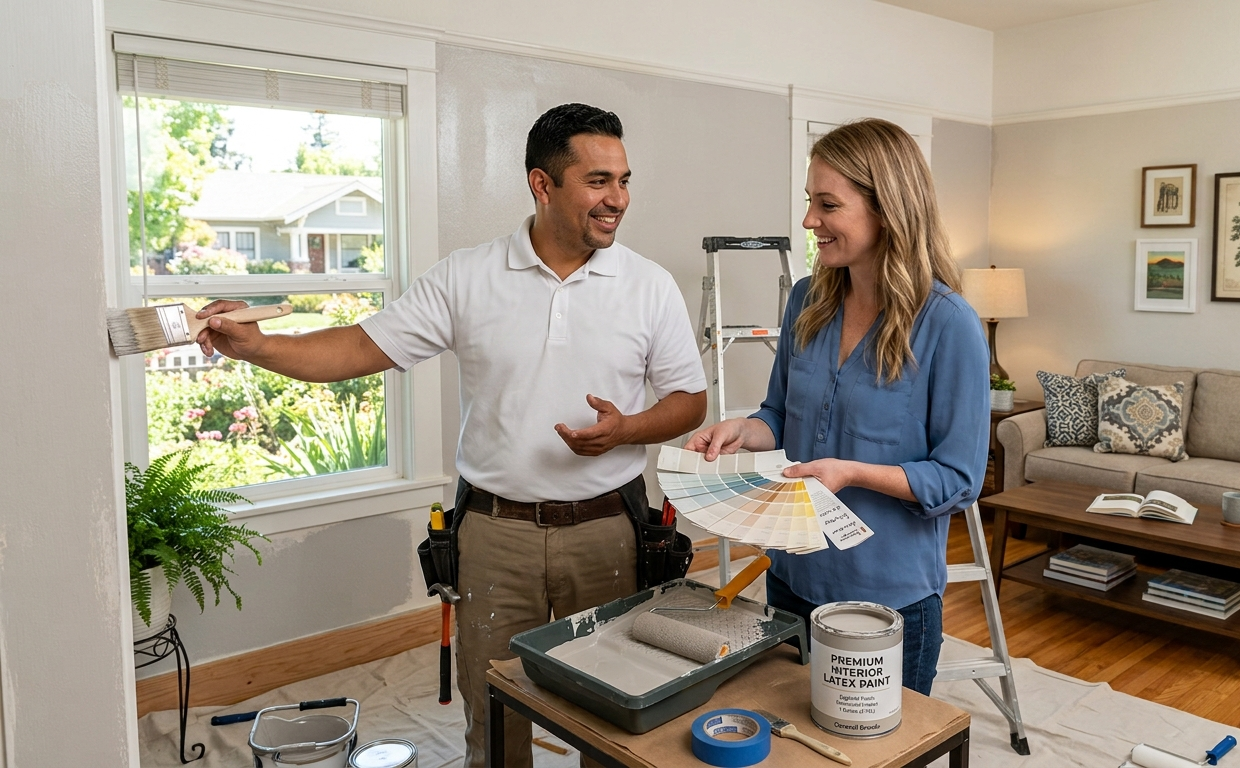
At SGB Custom Painting, every estimate lists the surfaces, prep, products, coats, and warranty, so you know exactly what you are getting before work starts. We are happy to walk you through each line and answer questions. Get a quick ballpark with our Painting Cost Estimator, or contact us to book a free on-site estimate for interior or exterior painting in Chico and the North Valley.
About SGB Custom Painting
SGB Custom Painting is a trusted Chico Painting Contractor known for clean prep, clear communication, and color that holds. For more than twenty five years, our local team has delivered interior, exterior, and cabinet projects for homes and businesses with careful protection, proper priming, and tidy jobsites. We follow EPA lead safe practices on older properties, keep schedules dependable, and give every project the respectful touch the North Valley deserves.

Love Your Space Again, Starting Today!
Locally Owned & Operated • EPA Lead Safe Certified • CSLB Licensed
Call 530-924-4109 or complete the form and expect a friendly call to confirm scope, discuss color options if needed, and deliver a no surprise estimate you can approve with confidence.
Contact Us
Refresh Your Home With Professional Painting
If you are thinking about repainting your interior, freshening up exterior siding, updating tired kitchen cabinets, or giving your business a cleaner look, our team is here to help you plan it right and paint it to last. Reach out to SGB Custom Painting to talk through your project, get honest expert guidance, and take the next step toward a home or workspace you will be proud of every day.
Follow Us
Elevate Your Space with SGB Custom Painting