SGB Custom Painting Blog
7 Warning Signs Your Home Needs Painting: The Ultimate Chico Homeowner’s Guide
Peterson SEO • December 17, 2025 | Chico, CA | USA

The "Invisible" Problem Hiding in Plain Sight
Living in a home is a bit like the old story of the frog in boiling water. Changes happen so slowly that you often do not notice them until it is too late. You walk past your front door every day on your way to work. You stare at the living room walls every evening while watching TV with your family. Because you see these surfaces constantly, your brain tunes out the slow fading of the color, the tiny hairline cracks in the stucco, or the way the baseboards have started to yellow and collect grime that simply won't wipe off.
Usually, it takes a "shock" to see the reality of your home's condition. Maybe you move a piece of furniture and realize the wall behind it is three shades darker than the rest of the room. Maybe a neighbor repaints their house, and suddenly yours looks tired, faded, and dusty by comparison. Or worse, you might lean against a doorframe and realize the wood feels soft and spongy under your hand. These moments of realization are crucial because they snap you out of the routine and show you the true state of your property. It is often the push you need to start looking for a professional painter.
Ignoring these subtle signals is the most expensive mistake a homeowner can make. Paint is not just cosmetic "makeup" for your house to make it look pretty. It is the protective shield that keeps water, UV rays, and pests out of your structural materials. When that shield fails, the damage spreads to the wood and drywall underneath, leading to rot and structural issues. Whether you are looking at residential painting chico services to boost curb appeal or to protect your investment, knowing what to look for is half the battle.
This comprehensive guide will walk you through the 7 critical warning signs, both inside and out, that tell you it is time to pick up the phone. We will dive deep into the science of why these failures happen so you understand the urgency. We will provide diagnostic tests you can perform yourself to check the health of your paint. Finally, we will show you how to spot these issues before they turn into five-figure repair bills that destroy your budget.
Quick Answer: What Are The Warning Signs I Need To Paint?
If you are inspecting your home for paint failure, look for these 7 key indicators:
- Chalking: A fine powder on exterior walls that signals the binder has failed chemically.
- Alligatoring: A pattern of cracks resembling reptile skin, indicating the coating has lost all flexibility.
- Peeling or Blistering: Paint lifting from the surface, often due to trapped moisture trying to escape.
- Fading: Uneven color loss, particularly on south-facing walls or near bright windows.
- Rot or Soft Wood: The structural material is compromised because the paint seal is broken.
- Persistent Scuff Marks: Interior walls that no longer wipe clean because the protective sheen has worn off.
- Caulk Separation: Gaps appearing where trim meets the wall, signaling that the watertight seal is breaking.
Pro Tip: Exterior signs are usually about structure and keeping water out of your home. Interior signs are often about lifestyle and the general cleanability of your living space. If you see peeling outside, you need to act fast to prevent water intrusion and wood rot. If you see fading inside, you have more time to plan your project, but your walls are definitely tired and need a refresh. Catching these issues early is the best way to save money in the long run.
Exterior Warning Signs: The Structural Threats
The outside of your home takes a beating from the elements every single day. In Chico, we deal with "Thermal Shock," where temperatures swing wildly between day and night during the summer. This causes your siding to expand and contract, putting immense stress on the paint film. As we detailed in our guide on how often to repaint your exterior, different materials fail at different rates, but the chemical signs of failure look similar regardless of whether you have stucco or wood.
1. The "Chalking" Handshake: Binder Failure
Go outside to the sunniest wall of your house, usually the south or west side. Rub your palm firmly against the siding in a circular motion. Do you see a dusty, chalky residue on your hand that looks like fine powder? That is not just dirt or dust from the garden. That is the paint itself breaking down and deteriorating right before your eyes.
The Science Behind It:
Modern paint is made of pigment (the color) and binder (the resin glue). The intense UV rays in the Sacramento Valley attack the binder first, breaking it down chemically. They break the chemical chains that hold the resin together, causing it to disintegrate. As the binder evaporates or degrades, it leaves the loose pigment dust sitting on the surface. This process exposes the substrate underneath to the elements.
The Diagnostic "Tape Test":
If you aren't sure if it is chalk or dirt, press a piece of clear packing tape onto the siding. Rub it firmly to ensure it sticks to the surface residue. Rip it off and look at the sticky side of the tape. If the tape is covered in colored powder that matches your house, your paint binder has failed.
A little chalking is normal as paint ages over the years. However, heavy chalking means your paint is getting thinner by the day and losing its protective qualities. It effectively means your "shield" is wearing thin and can no longer stop moisture. If you wash the house and the chalk returns quickly, your paint is at the end of its life. It is no longer protecting your siding from rain or pests, and it is time to call a pro. This is often the first and most overlooked sign that you need to schedule exterior painting Chico services before the surface starts to erode completely.
2. Alligatoring and Cracking: Loss of Flexibility
This looks exactly like it sounds, which is a pattern of cracks that resembles the scales on an alligator's back. It is distinct from peeling because the paint usually stays attached to the surface in little islands. Unlike peeling, which is an adhesion issue, alligatoring is a flexibility issue within the coating itself. It signals that the paint has become brittle and can no longer move with the substrate.
It often happens when a hard, rigid coating was applied over a softer, flexible one without proper prep. It can also happen simply when oil-based paints get old and brittle from years of sun exposure. As your house expands in the summer heat and shrinks in the winter cold, the paint has to move with it. When the paint loses its elasticity, it snaps instead of stretches, creating these fissures.
Why It Is Dangerous:
These cracks might look shallow to the naked eye, but they are treacherous. They act like capillaries, sucking water into the wood or stucco every time it rains or the sprinklers hit the house. Once water gets behind the paint, it cannot evaporate easily and gets trapped. It sits there soaking into your framing, creating the perfect environment for dry rot and termites to thrive.
According to the surface prep experts at Dutch Boy, this type of failure, often referred to as alligatoring, occurs when the paint film loses its ability to expand and contract with the wood. They emphasize that simply painting over these cracks won't work because the underlying issue is the brittleness of the old coating. The old paint usually needs to be scraped or sanded down to a sound surface first to break the pattern. If you skip this prep, the cracks will telegraph right through your new paint job in a matter of months.
3. Peeling and Blistering: The Moisture Trap
Paint should look like a second skin that is tightly bonded to your home. If you see it bubbling up or peeling away in sheets, the bond has failed completely. This usually points to a moisture control problem that is pushing the paint off the wall. It is a sign that water is winning the battle against your home's exterior.
- Blisters (Hydrostatic Pressure): These bubbles usually mean moisture is trapped behind the paint film. This could be from a leak, high humidity, or painting when the wood was damp. As the Chico sun heats the wall, that trapped water turns to vapor and expands. The vapor pushes the paint out, forming a bubble that eventually breaks. When that bubble pops, it leaves an opening for more water to get in.
- Peeling (Adhesion Failure): This often happens when prep work was skipped during the last paint job. If the previous painter didn't clean the chalky surface we mentioned earlier, or didn't prime the bare wood, the new topcoat has nothing to grab onto. It is like trying to put a sticker on a dusty table. It might stick for a minute, but it will curl up and fall off eventually.
This is a red alert for any homeowner. Exposed wood in our climate will deteriorate rapidly without protection. Once peeling starts, it accelerates because the edges lift up and catch water. The edge of the peel catches water, which travels further under the paint causing more peeling. It is a domino effect of damage that can ruin your siding in a single winter.
4. Dry Rot and Soft Wood: The Final Stage
This is the sign you never want to see because it means expensive repairs are needed. Take a screwdriver and gently press on the bottom corners of your window sills, door frames, and the bottom edge of your T1-11 or lap siding. Does the wood feel spongy or soft? Does it crumble away when you apply a little pressure?
If so, you are past the point of simple maintenance painting. The paint failed a long time ago, and water has destroyed the cellulose in the wood fibers. Painting over rot is like putting a band-aid on a broken bone. It hides the issue but fixes nothing, allowing the rot to spread deeper into the framing. In fact, sealing rot with new paint can sometimes make it worse by trapping the moisture inside the wood, feeding the fungus that causes the rot.
At this stage, you need carpentry repairs before you can even think about painting. A reputable residential painting chico contractor will always check for rot during an estimate because they know painting over it is a liability. If you catch the chalking or cracking early, you can avoid this expensive carpentry work entirely. Regular inspections are the key to avoiding this stage of failure.
Interior Warning Signs: The Lifestyle Impact
Inside the home, we do not worry as much about rain, but we worry about wear and tear. Your interior paint is a "wear layer" that handles scrubbing, bumps, grease, and light. While exterior failure threatens the structure of your house, interior failure threatens your sanity and the cleanliness of your home. It affects how your home feels and how easy it is to maintain.
5. The "Un-Scrubbable" Scuff Mark
Remember when your walls used to wipe clean with a damp sponge? If you are now scrubbing a mark and the paint starts to rub off, or if the stain simply won't budge, your paint sheen has failed. You might notice that cleaning a spot actually creates a bigger, duller spot on the wall.
Paint finishes like eggshell and satin rely on a resin shell to resist dirt and moisture. Over years of cleaning, bumping, and UV exposure, that resin wears down and thins out. This leaves the porous pigment exposed to the surface without a protective coating. Once the sheen is gone, the wall becomes a sponge for oils, dirt, and fingerprints.
The "Sponge Test":
Take a damp sponge and rub a discreet spot on your wall gently. If color comes off on the sponge, or if the water soaks into the wall leaving a dark spot instead of beading up, your paint is dead.
If your hallway or kitchen walls look dingy no matter how much you clean, it is because the paint itself absorbs the grime. It is time for a fresh coat of high-quality, washable acrylic. Modern paints have much harder resins than paints from even 10 years ago, so a refresh now will make your cleaning routine significantly easier. A new paint job will restore that wipeable surface you need for a busy home.
6. Fading and "Shadowing"
This is subtle and often goes unnoticed for years. You might not notice it until you take down a picture frame or move a bookshelf. Suddenly you see a bright, vibrant square of color where the wall was protected, surrounded by a dull, washed-out room. This "shadowing" effect is proof that your paint has degraded.
While interior paint doesn't face the same UV assault as exterior paint, sunlight streaming through windows still degrades color over time. This is especially true for organic pigments found in reds, yellows, and deep blues. If your living room looks tired and washed out, fading is likely the culprit. The sun slowly bleaches the life out of your walls.
This isn't just about aesthetics or making the room look pretty. When paint degrades enough to lose color, it is also losing its protective qualities and durability. Fresh paint not only restores the color but also brightens the entire room, making the space feel larger and cleaner. It brings the energy back into your living space.
7. Cracking Caulk and Separating Trim
Look at your baseboards, crown molding, and door casings. Do you see a jagged black line where the wood meets the drywall? That is failed caulking that has dried out and pulled away. It makes the trim look like it is floating off the wall.
Houses settle over time as the ground moves. Wood expands and contracts with humidity changes throughout the year. Over time, the caulk that bridges the gap between your trim and your wall dries out and snaps. This isn't just ugly; it breaks the visual seal of the room and makes it look unfinished. It makes the trim look old and detached, ruining the crisp lines of your architecture. It can also create a pathway for ants and other pests to enter the room from the wall cavity.
A professional interior painting Chico team won't just paint over that gap. They will cut out the old, dried-out caulk and apply a fresh, flexible bead to make those lines disappear again. This small detail is often what makes a professional paint job look so crisp compared to a DIY job. Proper caulking is essential for a finished, high-end look.
The Chico Climate Factor: Why It Happens Here
In Butte County, we have a specific climate profile that accelerates these issues faster than in other areas. We have intense UV radiation in the summer, followed by a wet and foggy season. This creates a cycle of "bake and soak" that is incredibly hard on building materials.
The sun bakes the oils out of the wood and the resins out of the paint all summer long. Then, the winter rains arrive and soak the brittle surfaces. If the paint is brittle from the summer heat, the water gets in through microscopic cracks. If you have T1-11 siding, which is very common in Chico, the bottom edges are particularly vulnerable. Once that bottom edge starts to swell with water, the clock is ticking very fast.
We also have a lot of clay soil in our area which expands when wet and shrinks when dry. As the seasons change, the ground swells and shrinks, moving the foundation of the house slightly. This moves the foundation of the house, which can cause hairline cracks in stucco and drywall. If your paint is fresh and flexible, it bridges those cracks and hides them. If your paint is old and brittle, the cracks transfer right through to the surface, letting water in.
The Hidden Cost of Ignoring These Signs
Many homeowners see these signs and think, "I'll get to it next year." It is a natural reaction to want to delay spending money. But paint failure follows an exponential cost curve, meaning it gets expensive very fast. It is not a straight line of depreciation.
- Stage 1 (Chalking/Fading): This is the maintenance window where you want to be. The surface is sound and just needs refreshing. A simple pressure wash and a fresh coat will solve it. Cost=Low.
- Stage 2 (Peeling/Cracking): Now you have adhesion failure and the paint is lifting. The old paint must be scraped and sanded aggressively to remove loose material. We have to spot prime bare areas. The prep time doubles. Cost=Medium.
- Stage 3 (Rot/Wood Damage): The water has won and damaged the structure. You need to replace siding boards, window sills, and potentially framing. You are paying for a carpenter and a painter. Cost= High.
Waiting until you see rot is the most expensive way to maintain a home. Catching the problem at the "chalking" or "cracking" stage saves you thousands of dollars in labor and materials. Proactive maintenance is always cheaper than reactive repair.
How to Inspect Your Home Like a Pro
You don't need to be a contractor to spot these issues yourself. Set a reminder in your phone for once a year, ideally in the spring. Take thirty minutes to walk around your property with fresh eyes.
- Walk the Perimeter: Go around your house slowly. Look up at the eaves for water stains and down at the foundation for peeling.
- Check the "Weather Side": Pay extra attention to the South and West sides. These fail 2-3 years faster than the North side due to sun exposure.
- Touch the Walls: Do the chalk test on the siding. Press on the wood trim to check for softness. Don't just look, but actually feel the surfaces.
- Check the Penetrations: Look closely where pipes, wires, and vents enter the siding. Is the seal good, or is the caulk cracked?
- Look for Water Trails: Dirty streaks under windows often mean water is getting behind the trim and washing dirt out from the wall cavity.
What Comes Next: The Importance of Prep
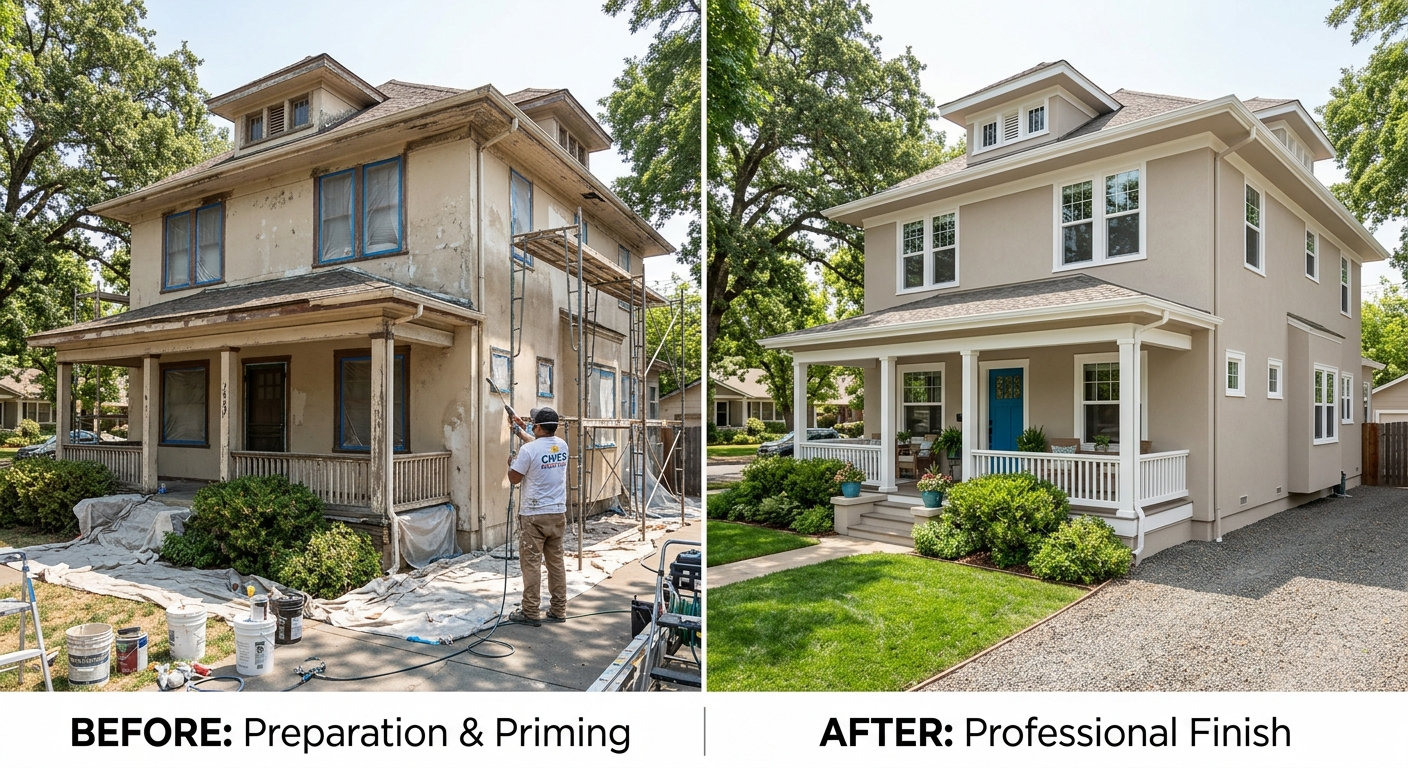
If you have spotted any of these 7 signs, you might be tempted to grab a brush and start covering them up immediately. But painting over problems usually just leads to more problems down the road. The key to fixing peeling, chalking, or cracking is not the paint, it is the preparation.
Addressing these warning signs requires a specific set of steps, from scraping and sanding to priming and caulking, which we will outline in detail in our upcoming guide on essential paint prep work. Without these critical steps, the new paint will simply fail in the same way the old paint did. Real prep work is what separates a 2-year paint job from a 10-year paint job. You cannot skip the hard work if you want lasting results.
How SGB Custom Painting Can Help
At SGB Custom Painting, we are trained to spot these signs early. When we walk your home for an estimate, we aren't just measuring square footage for a price. We are looking for the story the house is telling us about its health. Is the stucco cracking due to settling or moisture? Is the fascia board soft due to a gutter leak? Is the interior paint failing because it was a low-quality builder grade product?
We provide honest assessments for homeowners in Chico, Paradise, and Butte County. If your paint has a few more years of life, we will tell you honestly. If it is showing the critical signs of failure, we will propose a plan to fix the root cause, not just cover it up. We believe in doing the job right the first time.
Don't wait until the wood rots and the repairs get expensive. If you see these warning signs, reach out to SGB Custom Painting today. Let’s protect your home and bring it back to life with a professional finish that lasts.
About SGB Custom Painting
SGB Custom Painting is a trusted Chico Painting Contractor known for clean prep, clear communication, and color that holds. For more than twenty five years, our local team has delivered interior, exterior, and cabinet projects for homes and businesses with careful protection, proper priming, and tidy jobsites. We follow EPA lead safe practices on older properties, keep schedules dependable, and give every project the respectful touch the North Valley deserves.
Love Your Space Again, Starting Today!
Locally Owned & Operated • EPA Lead Safe Certified • CSLB Licensed
Call 530-924-4109 or complete the form and expect a friendly call to confirm scope, discuss color options if needed, and deliver a no surprise estimate you can approve with confidence.
Contact Us
Refresh Your Home With Professional Painting
If you are thinking about repainting your interior, freshening up exterior siding, updating tired kitchen cabinets, or giving your business a cleaner look, our team is here to help you plan it right and paint it to last. Reach out to SGB Custom Painting to talk through your project, get honest expert guidance, and take the next step toward a home or workspace you will be proud of every day.
Follow Us
Elevate Your Space with SGB Custom Painting